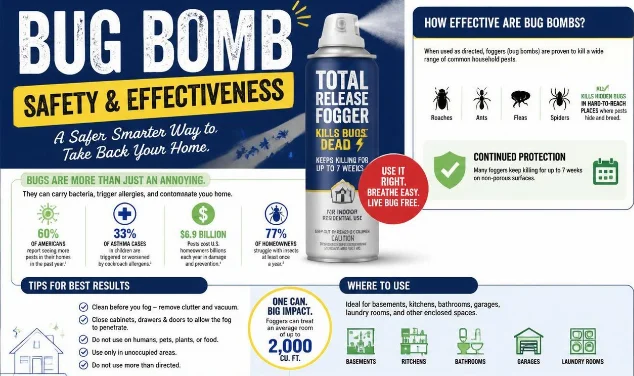

A bug bomb can kill insects exposed to its pesticide mist, but it has important limits. Total-release foggers often miss pests hiding inside cracks, walls, furniture, and cabinets. They also require careful preparation because improper use can expose people to pesticides or create fire hazards.
For many infestations, targeted treatments work better than filling an entire room with pesticide. The right choice depends on the pest, infestation location, product label, and your home. Homeowners should understand those limits before deciding whether a fogger belongs in their pest-control plan.
Direct answer: Total-release foggers can kill exposed insects, but they rarely solve infestations hidden inside cracks, walls, furniture, or appliances. U.S. homeowners should follow every EPA-registered label direction, leave during treatment, remove ignition risks, ventilate before returning, and consider targeted pest control for cockroaches, bed bugs, or recurring infestations.
| Question | Practical answer |
|---|---|
| What is it? | A total-release aerosol pesticide fogger |
| What can it kill? | Certain exposed insects listed on the product label |
| Does it reach hidden pests? | Often poorly |
| Must people leave? | Yes, according to the product label |
| Must pets leave? | Yes, including precautions for aquariums |
| Is there a fire risk? | Yes, some aerosol propellants are flammable |
| Is one treatment enough? | Often not for established infestations |
| Best first step | Identify the pest before choosing treatment |
Key Takeaways
- Foggers spread pesticide through open areas rather than targeting individual hiding places.
- EPA guidance warns about fire, explosion, exposure, and premature reentry risks.
- Never use more canisters than the product label specifies.
- Bed bugs respond poorly to total-release foggers in controlled research.
- Cockroach control often works better with targeted baits and sanitation.
- Pest prevention should include food control, moisture reduction, exclusion, and monitoring.
- Persistent infestations may justify professional inspection.
What Is a Total-Release Fogger?
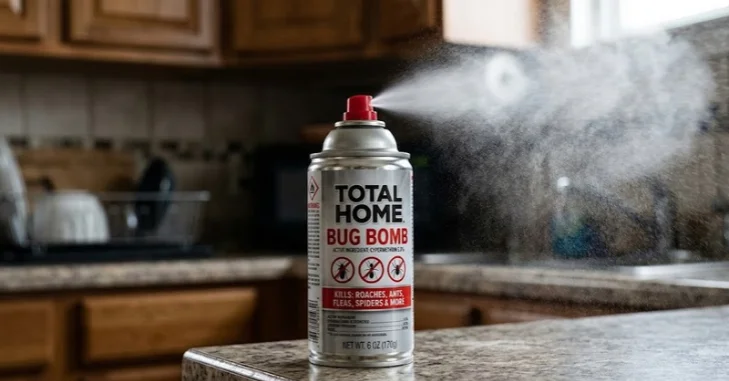
Bug Bomb Total-release foggers are aerosol pesticide products designed to empty their contents after activation. The airborne droplets spread through open space before settling onto exposed surfaces. The EPA commonly refers to these products as total-release foggers, or TRFs.
Many household products contain pyrethrins, pyrethroids, or related pesticide ingredients. The exact formulation depends on the registered product and target pests. You should always use the label rather than relying on generic online instructions.
The label also defines how much space one container can treat. Room volume matters because applying too much pesticide increases exposure and fire risks. EPA labeling changes specifically addressed excessive fogger use and confined spaces.
Do Bug Bombs Actually Work?
Foggers can kill susceptible insects that contact enough airborne pesticide. That makes them more useful against exposed pests than deeply hidden infestations. Their main weakness is poor penetration into protected harborages.
Cockroaches commonly shelter behind appliances, inside cabinets, and within structural gaps. Bed bugs hide inside furniture joints, mattress areas, baseboards, and narrow cracks. A drifting aerosol may never reach those locations at an effective concentration.
Research published in the Journal of Economic Entomology found poor results against field-collected bed bugs. The insects showed little adverse effect from several over-the-counter total-release products. Protected hiding places reduced fogger performance further.
Texas A&M also reported stronger results from gel baits in cockroach testing. Fogger-treated apartments showed pesticide residues on exposed surfaces without matching bait performance. That evidence favors targeted control for pests that spend most of their time hidden.
When a Bug Bomb Is a Poor Choice
A fogger is usually a weak option when insects live mainly inside protected cracks or voids. It can kill visible individuals while leaving eggs, hidden adults, or breeding sites untouched. Surviving pests can then rebuild the population.
Bed bugs are a strong example. Cornell Integrated Pest Management specifically advises against total-release foggers for bed bug control. Its guidance notes poor effectiveness and the possibility of moving insects into new areas.
Recurring cockroach problems also require more than airborne insecticide. Food residue, water sources, entry gaps, and nesting areas keep infestations active. Fixing those conditions supports longer-lasting control.
Moisture problems deserve attention because water supports several household pests. A Home Guru’s guide to preventing water leaks and home damage can help you identify moisture issues. Repairing leaks can remove conditions that make kitchens, bathrooms, and basements more attractive to pests.
Safety Steps Before Using a Fogger
Start by reading the entire pesticide label. The EPA requires labels to explain room-size limits, evacuation rules, ignition precautions, food protection, and reentry procedures. Those directions take priority over any general article or video.
People and pets must leave as directed before the product releases pesticide. Food and exposed preparation surfaces may require removal, covering, or later cleaning. Aquariums and other sensitive pet habitats need the precautions specified by the manufacturer.
Ignition sources require special attention because aerosol propellants may be flammable. The EPA warns that improper fogger use can cause fires or explosions. Never improvise around pilot lights, appliances, heaters, or other possible ignition sources.
Follow this preparation sequence:
- Identify the insect. Confirm the pest before selecting any pesticide.
- Check the label. Make sure your target pest appears on the registered label.
- Measure the treatment area. Use the product’s stated room-volume limits.
- Protect food and utensils. Follow label directions for removal or covering.
- Remove occupants and pets. Include every area affected by the treatment.
- Address ignition sources. Follow the exact manufacturer instructions.
- Plan reentry. Know the required waiting and ventilation periods before activation.
Using a Fogger Without Increasing the Risk
Never assume that using two containers will work twice as well. EPA-required labeling warns against using multiple canisters beyond the stated treatment rate. Extra pesticide can increase both chemical exposure and flammable vapor concentrations.
Activate only an EPA-registered product according to its package directions. Leave the treated area promptly when the label tells you to leave. Do not remain elsewhere inside the home unless the label expressly permits that situation.
This matters because airborne pesticide can move beyond a single room. Current consumer guidance also cautions against staying inside while one room is fogged. Reentry should follow the product’s stated interval, not a guessed timetable.
If anyone develops breathing difficulty, severe irritation, vomiting, or concerning symptoms after exposure, seek medical guidance. Washington State health officials list respiratory, digestive, skin, and eye symptoms among possible fogger effects. People with asthma or other respiratory diseases can face greater risk.
What to Do After Treatment
Do not return before the label permits reentry. When the waiting period ends, ventilate the home exactly as directed. Opening windows and doors may be required before normal occupancy resumes.
Clean food-contact surfaces when the product instructions call for it. Wash exposed utensils or dishes if they were not protected beforehand. Avoid inventing cleanup procedures that conflict with the pesticide label.
You should also inspect whether the original pest problem remains. Dead visible insects do not prove that nests or hidden populations disappeared. Monitoring over the following days gives you better evidence.
If pests continue appearing, avoid repeatedly fogging the home without reassessing the cause. Visit A Home Guru’s pest-control section as new household pest resources are added. A targeted inspection usually provides more useful information than another whole-room treatment.
Better Alternatives for Common Indoor Pests
Different pests require different tools. Targeted products reduce unnecessary pesticide spread and place treatment closer to hiding locations. Prevention also removes the conditions that allow populations to recover.
| Pest | Often better approach | Why |
|---|---|---|
| Cockroaches | Gel baits, sanitation, crack treatment | Reaches feeding and hiding areas |
| Bed bugs | Inspection, heat, targeted registered treatments | Foggers perform poorly against hidden populations |
| Ants | Baits plus entry-point control | Workers carry bait toward colonies |
| Fleas | Pet treatment, vacuuming, targeted indoor treatment | Addresses animals, eggs, and development sites |
| Pantry pests | Remove infested food and clean storage | Eliminates the breeding source |
| Rodents | Trapping and exclusion | Aerosol insecticides do not address rodents |
Vacuuming can support pest cleanup when it suits the species. It can remove debris, shed skins, insects, or flea stages from accessible surfaces. A Home Guru’s shop vacuum buying guide explains features useful for heavier household cleanup.
Professional pest control becomes sensible when infestations persist, spread, or involve difficult hiding areas. An inspection can identify entry points and nesting locations before treatment starts. For rodent problems, see A Home Guru’s current rodent exterminator cost guide instead of using insect-control products.
How to Prevent Another Infestation
Prevention starts with food, water, shelter, and entry points. Store food securely, clean crumbs, fix leaks, and empty household trash regularly. Reduce clutter around locations where insects can shelter unnoticed.
Seal accessible gaps around plumbing, baseboards, windows, and doors when practical. Repair screens and inspect packages before bringing stored items indoors. These steps make your home less hospitable without adding pesticide exposure.
Monitoring also helps you catch problems early. Sticky traps can reveal activity patterns for certain crawling insects. Early identification gives you more targeted treatment choices.
Choose the Treatment That Fits the Pest
Whole-room fogging can appear easier than tracing an infestation to its source. Yet convenience does not guarantee effective control. Hidden insects often require baits, exclusion, cleaning, monitoring, or professionally targeted treatments.
Start by identifying the pest and removing conditions that support it. If you still choose a total-release fogger, treat the product label as mandatory safety instructions. Persistent activity after treatment is a good reason to switch strategies or arrange a professional inspection.
Frequently Asked Questions
Is a bug bomb safe to use around children and pets?
Children and pets should not remain in the treated area during use. Follow the product label for evacuation, reentry, and pet-related precautions. Fogger exposure can cause illness when occupants remain inside or return too early.
How long do you stay out after using a total-release fogger?
There is no universal waiting period that overrides the pesticide label. Different products specify different reentry times based on their formulation and registered directions. Stay out for the full label period and complete any required ventilation afterward.
Do foggers kill bed bugs?
Evidence suggests they are a poor bed bug treatment. Laboratory research found little effect on field-collected bed bugs from several consumer foggers. Cornell IPM also advises against using foggers for bed bug management.
Can you use several foggers for a severe infestation?
Do not exceed the amount stated on the pesticide label. EPA safety requirements warn against excessive canister use because it can increase exposure and fire hazards. A severe infestation is a reason to reassess the treatment strategy, not automatically increase the dosage.
Do you need to clean everything afterward?
Cleaning requirements depend on the registered product’s directions. Food-contact surfaces, utensils, or exposed belongings may require cleaning when specified by the label. Follow those instructions rather than applying one cleanup rule to every product.