
Choosing the right curtain lengths can make windows look taller and a room feel more finished. Common U.S. ready-made sizes include 63, 84, 95 or 96, 108, and 120 inches. Your best size depends on rod height, floor position, window location, and the finish you want.
Quick answer: Most U.S. ready-made curtains come in 63, 84, 95, 96, 108, and 120-inch lengths. For living rooms and bedrooms, panels usually look polished when they reach the floor. Measure from the actual hanging point to your desired endpoint before buying, because ceiling height alone cannot determine the correct size.
Standard Curtain Lengths at a Glance
Ready-made panels use recurring sizes because they must work across many common residential windows. These dimensions are retail conventions rather than fixed building standards. Exact options can also differ between manufacturers.
| Length | Common Use | Typical Result |
|---|---|---|
| 63 inches | Short windows and windows above furniture | Sill or apron-style appearance |
| 84 inches | Standard rooms with lower rod placement | Floor length when measurements allow |
| 95 or 96 inches | Higher rods in many standard rooms | Taller, more extended appearance |
| 108 inches | High windows and taller ceilings | Floor-length treatment |
| 120 inches | 10-foot ceilings and tall walls | Full-height dramatic treatment |
The number on the package should be treated as a starting point. Always compare it with your actual rod-to-floor measurement. Buying by ceiling height alone can leave panels several inches short.
Key Takeaways
* Common U.S. sizes are 63, 84, 95 or 96, 108, and 120 inches. * Floor-length panels suit most living rooms, bedrooms, and dining rooms. * A 63-inch size works better where full-length fabric would obstruct furniture or fixtures. * Measure from the actual hanging point rather than the window frame alone. * Decide whether the fabric should float, touch, break, or puddle before ordering. * Check whether the package contains one panel or a pair before calculating width.
What Curtain Lengths Should You Choose?

The right curtain lengths depend first on where you want the fabric to end. A living-room window often benefits from a floor-length treatment. A kitchen window above a counter usually needs a shorter solution.
Function should guide the decision before style. Fabric touching the floor may be inconvenient around pets, cleaning equipment, or busy walkways. Shorter treatments can also make sense above desks, radiators, cabinets, or built-in seating.
63-Inch Curtains
A 63-inch panel works well when reaching the floor isn’t practical. It can suit shorter windows, utility spaces, or openings positioned above furniture. The finished treatment should still appear intentionally proportioned.
Avoid selecting this size simply because the window itself looks small. A short window can still support full-length drapery when the surrounding wall allows it. Consider the entire wall before deciding where the fabric should stop.
84-Inch Curtains
An 84-inch panel is widely available for American homes. It may reach the floor when the rod sits relatively close to the window frame. Raising the hardware can quickly make this size too short.
Measure before assuming 84 inches will fit an eight-foot room. Two homes with identical ceiling heights can require different panel sizes. Window placement and hardware position can change the required drop substantially.
95- or 96-Inch Curtains
These sizes provide extra length for higher mounting positions. They can work especially well when 84-inch panels leave an awkward floor gap. Some manufacturers sell 95 inches, while others use 96 inches.
That one-inch difference can matter with a precise floor-touching finish. A slight float provides more tolerance for small measurement differences. Adjustable hardware can also help fine-tune the final position.
108-Inch Curtains
A 108-inch panel suits many taller windows and higher mounting positions. It is often considered for nine-foot rooms, although measurements should determine the final choice. High mounting can create a strong vertical line across the wall.
Long fabric also adds weight to the hardware. Check the rod, brackets, and anchors before installing heavier materials. Follow the hardware manufacturer’s mounting requirements for secure support.
120-Inch Curtains
A 120-inch option is designed for tall walls and high installation points. It can suit rooms with ten-foot ceilings or expansive windows. These panels also support a near-ceiling-to-floor appearance.
Extra length requires careful measuring because errors become visually obvious. Check the floor at several points when possible. Older homes may have small variations across the same wall.
How to Measure for the Right Length
Start by deciding where the rod or track will sit. Don’t buy panels and then force the hardware position to accommodate them. Planning the installation first gives you greater control over the finished proportions.
Measure from the point where the fabric will hang to the desired endpoint. Rings, clips, grommets, and hooks can change that starting position. Check the manufacturer’s measurement diagram for your selected heading style.
Use this simple process:
1. Choose the rod position. Mark the planned mounting height before measuring the drop. 2. Identify the hanging point. Account for rings, clips, hooks, grommets, or a track. 3. Measure toward the floor. Take measurements at the left, center, and right when possible. 4. Choose the finish. Decide whether the panels will float, touch, break, or puddle. 5. Compare standard sizes. Choose the closest practical ready-made option or plan alterations.
Record each measurement rather than relying on memory. Floors and ceilings aren’t always perfectly level, especially in older properties. Several measurements can prevent an uneven-looking hem.
Should Curtains Touch the Floor?
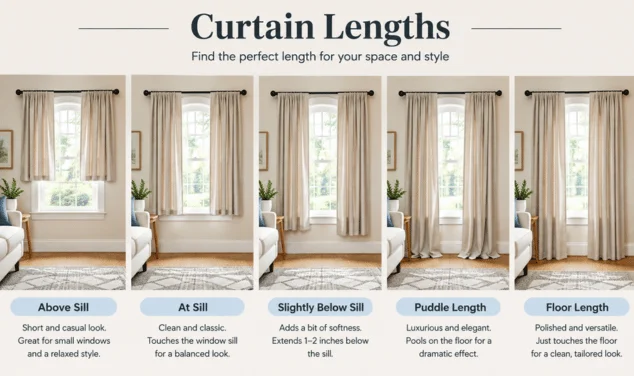
Floor-length curtains generally look polished when they touch the floor or stop close to it. A small gap can make daily cleaning easier while maintaining the visual effect. The ideal finish depends on your room and maintenance preferences.
A float stops roughly half an inch to one inch above the floor. A touch, sometimes called a kiss, meets the floor with little extra fabric. Break and puddle styles add progressively more material at floor level.
| Finish | Position | Best Suited For |
|---|---|---|
| Float | About ½ to 1 inch above the floor | Everyday rooms and easy cleaning |
| Touch | Meets the floor | Tailored living and dining spaces |
| Slight break | Small amount of extra fabric | Relaxed or traditional interiors |
| Puddle | Several inches rest on the floor. | Formal, decorative rooms |
A float is practical where panels open and close frequently. It also helps around pets and regular vacuuming. Exact floor contact requires more precise measurements.
Puddling creates a softer decorative effect but needs more maintenance. Extra material can collect dust or shift when people pass nearby. Reserve it for spaces where appearance matters more than easy operation.
Choosing Length by Room
Living rooms usually benefit from panels that visually connect the upper wall with the floor. This approach can make the window treatment feel larger and more integrated. A float or floor touch works well for many households.
Bedrooms also suit long panels, especially when privacy and light control matter. Blackout fabric should cover the window fully, but length is only one consideration. Side coverage and the center overlap also affect incoming light.
Kitchens and bathrooms often need a different approach. Counters, sinks, moisture, furniture, and fixtures can make shorter panels more practical. Café, silk, or apron treatments can provide privacy without excess fabric.
Dining rooms can support a more formal floor-length treatment. Panels that touch the floor create a precise appearance without large amounts of pooled material. Keep fabric clear of chair movement and high-traffic paths.
For open-plan spaces, curtains can also work beyond conventional windows. AHomeGuru’s room divider ideas guide explains how full-height fabric can define zones while preserving flexibility. Coordinating the panel height with nearby window treatments can make the room feel more consistent.
Don’t Forget Curtain Width and Fullness
Correct length won’t compensate for panels that are too narrow. Curtains need enough fabric to create folds when closed instead of stretching flat across the rod. Calculate width separately after determining the finished rod span.
A common starting point is roughly 1.5 to 2.5 times the working rod width. Fabric weight and heading style can change the amount of fullness you prefer. Always check whether the listed package width represents one panel or an entire pair.
Room layout matters as well because furniture can interfere with the way fabric hangs. A chair, table, or cabinet pressed against a window may prevent panels from falling naturally. A HomeGuru bedroom seating guide offers useful placement ideas when arranging seating near windows.
Common Curtain-Length Mistakes
Buying panels before deciding the rod position causes many sizing problems. Raising the hardware afterward can turn a planned floor-length treatment into noticeably short panels. Plan the hardware and finished endpoint together.
Another mistake is measuring only the window opening. Floor-length fabric extends beyond the glass and usually begins above the frame. The actual hanging point matters more than the glass height.
Avoid assuming every room needs identical dimensions. Kitchens and utility spaces have different requirements from bedrooms and living rooms. Consistency matters within one visible space, but function should guide choices between rooms.
Color also changes how a large fabric surface interacts with the room. Neutral drapery can connect walls, flooring, and furniture without becoming the main focal point. A HomeGuru’s Edgecomb Gray and Revere Pewter comparison can help when coordinating neutral wall colors with textiles.
What If Your Curtains Are Too Short or Too Long?
Slight sizing problems don’t always require replacement. If panels are a little short, changing rings or adjusting the rod may provide enough additional drop. A generous bottom hem may also allow professional alteration.
Long panels are usually easier to correct. Raising the rod can work when wall space allows, while hemming creates a more permanent solution. Temporary hemming products may help renters who cannot alter the fabric permanently.
Large differences are harder to disguise successfully. Replacing significantly undersized panels often produces a cleaner result than lowering hardware excessively. The window treatment should look intentional rather than adjusted around the wrong size.
Frequently Asked Questions
What are standard curtain lengths in the US?
Standard curtain lengths commonly include 63, 84, 95 or 96, 108, and 120 inches. Individual brands may offer additional sizes or skip certain options. Measure your planned hanging point before selecting one.
Are 84-inch curtains long enough?
They can be when the rod-to-endpoint measurement is close to 84 inches. They may look short when the hardware is installed higher above the window. Measure the planned installation rather than choosing solely from ceiling height.
Should curtains touch the floor?
They usually look polished when they touch or nearly reach the floor in main living spaces. A half-inch to one-inch float is practical for frequently used panels. Kitchens and windows above furniture may need shorter treatments.
Are 96-inch curtains good for eight-foot ceilings?
They can work with a higher rod position, but ceiling height doesn’t guarantee the correct size. Window position and hanging hardware affect the finished drop. Measure from the actual hanging point to your chosen endpoint.
How far should curtains be above the floor?
About half an inch to one inch creates a practical floating finish. This distance reduces dragging and makes cleaning easier. Keep the gap consistent across the entire window.
Choose the Size From Your Measurements
The best window treatment starts with measurements, not a number printed on a package. Decide where the hardware will sit and how the fabric should meet the floor. Then match that measurement with the closest suitable ready-made size.
For most living rooms and bedrooms, a floor-length appearance is a dependable starting point. Shorter panels remain useful where counters, furniture, fixtures, or heating equipment make long fabric impractical. Browse AHomeGuru’s decoration guides for more ideas on coordinating window treatments with the rest of your room.