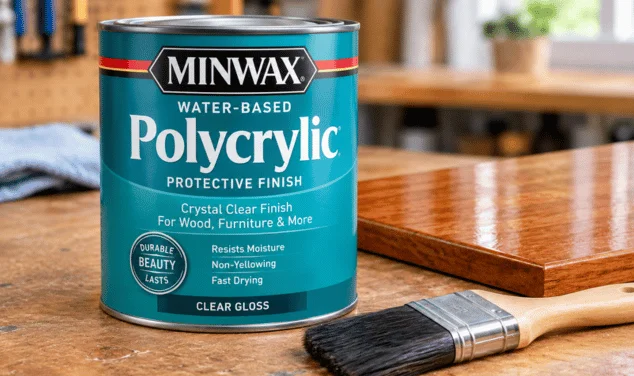

Polycrylic is a water-based clear topcoat designed to protect interior wood, stain, and many painted surfaces. It dries clear, cleans up with soap and water, and recoats faster than many oil-based finishes. Those qualities make it useful for furniture, cabinets, trim, crafts, and other indoor projects.
Choosing the right clear coat still depends on the surface and expected wear. This finish favors color clarity and convenient application rather than maximum resistance to heavy traffic. Understanding those limits helps you avoid peeling, yellowing, brush marks, and early wear.
Quick Facts
| Feature | What to Know |
|---|---|
| Base | Water-based |
| Best uses | Interior furniture, cabinets, doors, trim, crafts |
| Color effect | Dries clear with little ambering |
| Recoat time | About 2 hours for standard Minwax formulas |
| Typical coats | 2–3 thin coats |
| Cleanup | Soap and warm water |
| Floors | Not recommended |
| Application | Synthetic-bristle brush or compatible applicator |
| Main advantage | Clear appearance and fast recoating |
| Main limitation | Less suitable for floors and demanding wear |
Direct answer: This clear protective coating works best on indoor projects where maintaining the original color matters. It suits light woods, stained furniture, painted pieces, cabinets, and trim. Apply several thin coats, maintain a wet edge, and allow each coat to dry before lightly sanding.
Key Takeaways
- Choose it when you want a clear finish with minimal amber color.
- Use it primarily on interior woodwork, furniture, doors, cabinets, and decorative projects.
- Apply thin coats instead of trying to build protection with one heavy coat.
- Let each coat dry fully before sanding or recoating.
- Avoid using it as a standard floor finish.
- Consider polyurethane when wear resistance matters more than color clarity.
What Is Polycrylic?
Polycrylic is Minwax’s name for a crystal-clear, water-based protective topcoat. The manufacturer recommends it for interior woodwork, furniture, doors, and cabinets. It can protect bare wood and surfaces treated with compatible oil-based or water-based stains.
Its biggest visual advantage is color neutrality compared with traditional oil-based polyurethane. Oil-based finishes can add a warm amber tone, especially over pale woods or light paint. A clearer coating helps maple, birch, white finishes, and cooler colors retain their intended appearance.
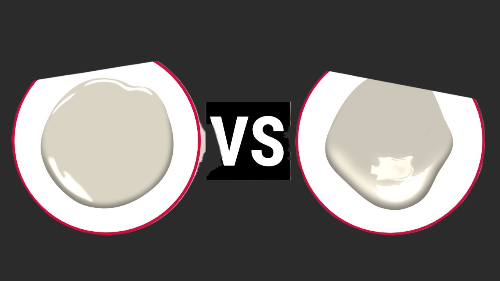
This feature can matter when coordinating a finished piece with an established room palette. A clear topcoat should protect your project without unexpectedly warming its color. For related color planning, AHomeGuru’s Edgecomb Gray and Revere Pewter comparison explains how undertones affect interior choices. Compare Edgecomb Gray and Revere Pewter on AHomeGuru
Where This Clear Finish Works Best
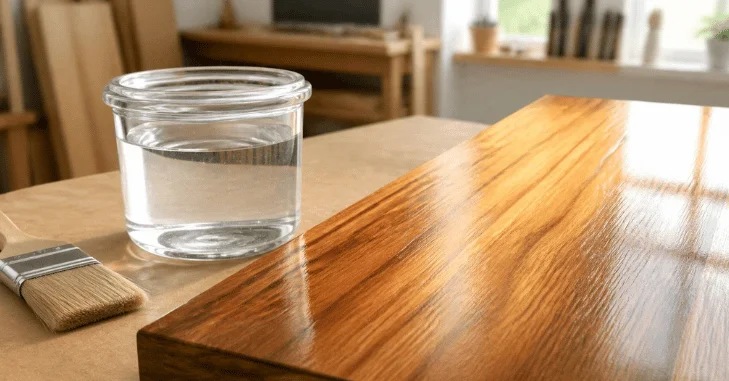
Interior furniture is one of its most practical uses. Dressers, bookshelves, side tables, decorative cabinets, and refinished pieces can benefit from added protection. The clear film can help resist ordinary scratches, scuffs, dirt, and minor spills.
Painted projects are another strong use case, especially when the underlying color should remain unchanged. White, cream, gray, pastel, and pale wood surfaces can look different beneath amber-toned finishes. A clear water-based coat reduces that color-shift concern.
Interior trim and wood features can also benefit from a protective coat. Painted or stained wood accents often need protection from everyday handling and cleaning. If you’re working with wood wall details, AHomeGuru’s shiplap backsplash ideas offer useful design context for sealed wood surfaces. See AHomeGuru’s shiplap backsplash ideas
When You Should Choose Something Else
Floors need a coating designed for foot traffic, abrasion, and repeated cleaning. Minwax specifically lists its standard clear water-based coating as unsuitable for floors. A floor-rated polyurethane or another flooring finish is the safer choice.
Outdoor projects also need products designed for weather exposure. Sunlight, moisture, temperature swings, and standing water demand different protective properties. Look for an exterior-rated clear finish instead of assuming an indoor coating will perform outside.
Heavy-use surfaces deserve extra consideration as well. Dining tables, worktops, and frequently handled cabinets may need stronger abrasion or moisture resistance. Water-based polyurethane can offer a useful middle ground when you want clarity with greater durability.
Clear Water-Based Finish vs. Polyurethane
These finishes perform similar jobs, but they aren’t interchangeable in every project. Traditional oil-based polyurethane usually offers greater durability while adding warmth to the surface. Water-based polyurethane provides another option when clarity and stronger wear resistance both matter.
| Factor | Clear Water-Based Topcoat | Oil-Based Polyurethane | Water-Based Polyurethane |
|---|---|---|---|
| Color | Clear | Warm or amber | Usually clear |
| Cleanup | Soap and water | Mineral spirits | Water |
| Drying | Fast | Slower | Fast |
| Odor | Lower | Stronger | Lower |
| Best for | Light interior projects | High-wear wood | Clear, durable interior protection |
| Floors | No | Some formulas | Some formulas |
| Light paint | Strong choice | May yellow | Strong choice |
Choose based on the project rather than the product name alone. Pale furniture often benefits from a clear water-based coating, while floors need a floor-rated product. Frequently used tables may benefit from water-based polyurethane when yellowing remains a concern.
How to Apply Polycrylic for a Smooth Finish
A smooth result depends more on preparation and technique than applying a thick layer. Fast-drying water-based finishes can show lap marks when you repeatedly brush areas already setting. Prepare the surface first, then work in thin and controlled coats.
- Clean the surface. Remove dust, grease, wax, and loose material before coating.
- Let paint or stain dry. Follow the coating manufacturer’s drying instructions before adding a protective layer.
- Stir the finish gently. Avoid aggressive shaking that may introduce unnecessary bubbles.
- Use a quality synthetic brush. Apply a thin, even coat while following the wood grain.
- Maintain a wet edge. Work steadily and avoid repeatedly brushing areas that have started drying.
- Allow the coat to dry. Standard Minwax guidance permits recoating after about two hours.
- Sand lightly when directed. A fine abrasive can remove raised grain and small surface imperfections.
- Remove sanding dust. Keep the next coat clean by removing residue carefully.
- Apply additional thin coats. Two or three coats are commonly recommended for standard applications.
- Let the finish cure. Avoid demanding use until the coating has developed adequate hardness.
Thin coats reduce runs and make application easier to control. Heavy coats may stay uneven or create visible ridges before drying. Good lighting also helps reveal missed areas before the coating sets.
How to Avoid Brush Marks, Bubbles, and Streaks
Overbrushing is one of the easiest ways to create visible marks. Spread the coating, smooth it with the grain, and then leave the area alone. Returning after it begins drying can disturb the forming film.
Air bubbles often become more noticeable on glossy surfaces. Stir the container rather than vigorously shaking it before brushing. Use controlled strokes and avoid aggressively whipping the brush through the liquid.
Temperature, airflow, and surface condition also influence the result. Strong airflow can make a fast-drying coating set before you maintain a smooth wet edge. Always follow the current product label because individual formulas can have different requirements.
Using a Clear Coat Over Paint
A protective topcoat isn’t automatically necessary over every painted surface. Quality furniture or cabinet paint may provide enough durability for some projects. A clear layer makes more sense when extra protection, a specific sheen, or easier cleaning is needed.
Make sure the paint is fully dry according to its manufacturer’s instructions. Applying a clear coat too soon can trap moisture or affect adhesion. Testing the finish in a hidden area can reveal unwanted color or compatibility problems.
Home painting schedules also vary by surface and traffic levels. Rooms and high-contact areas often wear differently from low-use spaces. AHomeGuru’s guide to how often you should paint your house can help with broader maintenance planning. Read AHomeGuru’s house-painting schedule guide.
Common Application Mistakes
Applying one heavy coat instead of several thin coats often creates avoidable problems. Thick layers can run, sag, or dry unevenly before they level properly. Several controlled coats usually produce a cleaner finished surface.
Another mistake is treating every clear finish as suitable for every location. Floors, outdoor furniture, shower areas, and heavily used worktops have demanding exposure conditions. Match the coating to those conditions instead of relying on appearance alone.
Skipping the label is equally risky because product formulas can change. Recoat windows, preparation requirements, recommended tools, and cure guidance can differ between products. Current manufacturer directions should take priority over generic finishing advice.
Drying, Recoating, and Curing
Drying and curing describe different stages of the finishing process. A coating can feel dry while the protective film continues developing hardness underneath. Treating the surface gently during that period helps prevent dents and premature damage.
Minwax lists approximately two hours between coats for its standard protective formula. Its product guide also lists light handling after several hours and normal use after roughly one day. Conditions and specific formulas can affect those times, so check your container.
Curing becomes more important when the finished item will receive frequent contact. Don’t place heavy objects on a newly coated surface earlier than necessary. Giving the finish adequate time can improve the appearance and reduce marks.
How to Pick the Right Sheen
Gloss reflects the most light and makes surface details more noticeable. It can create a polished look, but scratches and application flaws may appear more obvious. Gloss works well when strong shine is part of the design.
Satin and semi-gloss provide more moderate reflection. These sheens often suit furniture, cabinets, doors, and trim because they balance appearance with practical cleaning. Matte and ultra-flat options reduce shine when you prefer a softer appearance.
Sheen doesn’t replace proper surface preparation. Sanding scratches, dust, dents, and uneven paint can remain visible beneath clear coatings. Prepare the substrate carefully before choosing the final gloss level.
Frequently Asked Questions
Is polycrylic waterproof?
Polycrylic adds protection against ordinary spills and moisture, but it shouldn’t be treated as a waterproofing system. Constant water exposure demands a finish designed for that environment. Bathrooms, outdoor projects, and wet worktops may require a different coating.
Does a clear water-based finish turn yellow?
Clear water-based coatings generally resist the amber appearance associated with traditional oil-based polyurethane. That makes them useful over light woods and pale painted surfaces. Test an inconspicuous area because the underlying coating can still influence the final appearance.
Can I use it over painted furniture?
Yes, many painted furniture projects can accept a compatible clear water-based protective coat. The paint should be dry and suitable for topcoating before application. Test first when combining products from different manufacturers.
How many coats should I apply?
Two or three thin coats are common for standard interior applications. Minwax currently recommends two to three coats in its product guide. Follow the instructions for your specific container because formulations and application methods may differ.
Can I use it on a dining table?
You can use a clear water-based coating on light-use furniture, but durability requirements should guide your choice. Dining tables receive spills, cleaning, abrasion, and repeated contact. A stronger water-based polyurethane may be preferable for demanding daily use.
Should I sand between coats?
Light sanding can smooth raised grain and small imperfections between coats when the directions call for it. Remove all sanding residue before applying the next coat. Never substitute generic advice for the instructions printed on your specific product.
The Bottom Line
A clear water-based topcoat is a practical choice when you want interior protection without adding noticeable amber color. It works particularly well on pale woods, painted furniture, cabinets, trim, and decorative pieces. Its fast recoating and water cleanup also make it approachable for home DIY projects.
Match the finish to the amount of wear your project will receive. Choose a floor-rated or more durable product when abrasion, weather, heat, or constant moisture becomes the priority. Careful preparation and several thin coats will usually produce better results than one heavy application.
Before starting, test your complete finishing system on scrap material or a hidden area. Confirm the color, sheen, adhesion, and application method before coating the visible surface. That small test can prevent a much larger refinishing job later.
—–