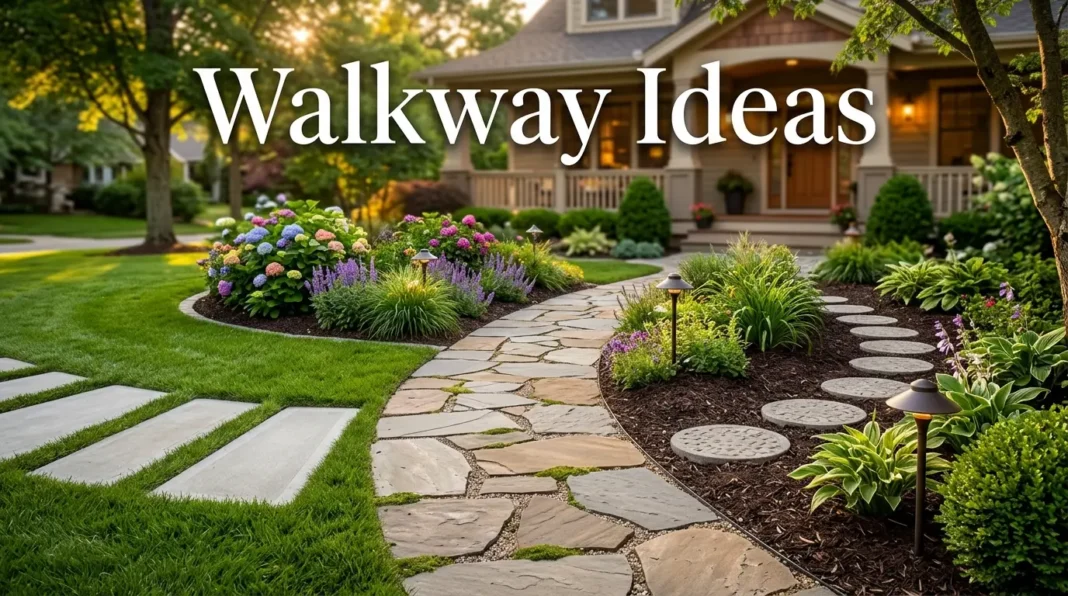

The best walkway ideas make outdoor spaces easier to use while improving the look of the property. Your material, path shape, drainage, and surrounding plants all affect the finished result. A good design should also suit your climate, budget, and daily traffic. A front path usually needs a stable and welcoming surface for frequent use. A garden route can be softer, narrower, and more informal. Backyard paths can connect patios, seating areas, gates, sheds, pools, and planting beds.
Quick answer: Choose a path material based on traffic, drainage, maintenance, climate, and your home’s architecture. Pavers and concrete suit busy routes, while gravel and stepping stones work well in casual gardens. Add secure edging, proper grading, suitable lighting, and enough width for comfortable everyday movement.
| Planning Point | Practical Choice |
|---|---|
| Frequent foot traffic | Concrete, brick, or concrete pavers |
| Natural garden look | Flagstone, stepping stones, or gravel |
| Lower-cost project | Gravel, mulch, or simple stepping stones |
| Modern appearance | Large concrete slabs or geometric pavers |
| Traditional home | Brick, stone, or classic pavers |
| Wet location | Well-drained base with controlled runoff |
| Low maintenance | Concrete or properly installed pavers |
| Evening use | Low-glare path lighting |
Key Takeaways
* Match the surface to how often people will use the path. * Create gentle curves where they support natural traffic flow. * Use straight lines when the architecture calls for a formal appearance. * Plan drainage before installing stone, gravel, or pavers. * Include edging where loose materials could spread into lawns. * Consider mature tree roots before choosing the final route. * Use lighting for safer nighttime movement without excessive glare.
17 Walkway Ideas for Front Yards, Gardens, and Backyards
1. Create a Classic Brick Path
Brick works especially well beside Colonial, cottage, farmhouse, and other traditional American homes. A running-bond pattern creates a calm appearance, while herringbone adds more visual movement. Choose exterior paving brick rather than products intended only for walls. Brick can develop character as the surrounding garden matures. Its warm colors pair naturally with lawns, flowering borders, and painted siding. Proper base preparation helps reduce movement and uneven areas over time.
2. Use Large Concrete Slabs for a Modern Yard
Large rectangular slabs can give a front or backyard a clean contemporary appearance. Leave narrow joints between them for a strong geometric effect. Dark gravel or low-growing plants can make those shapes stand out. This approach suits homes with simple architectural lines and restrained landscaping. Larger slabs also reduce the number of visible joints. Keep each section level enough for comfortable daily use.
3. Build a Relaxed Gravel Garden Path
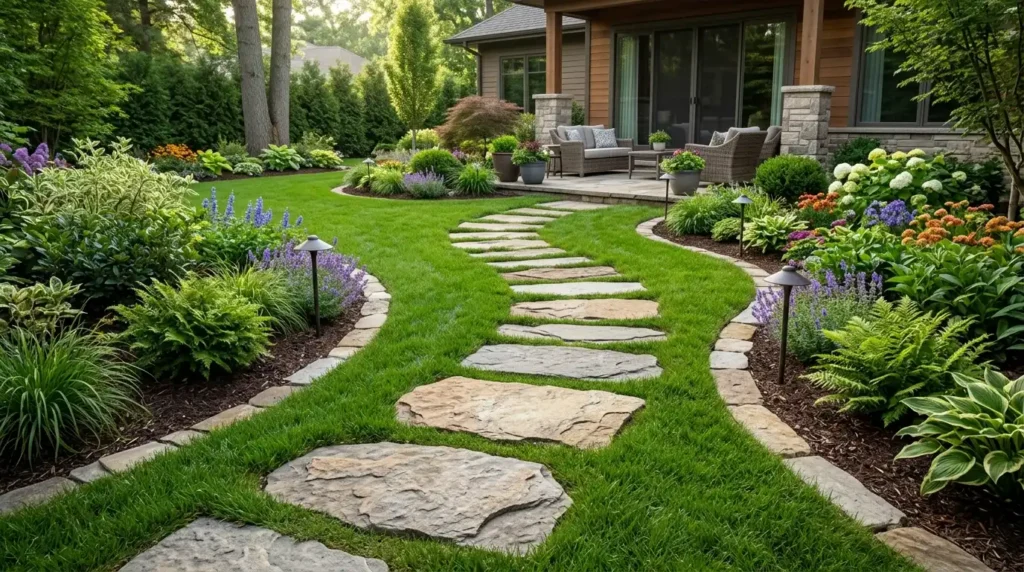
Gravel creates a casual surface that works well around flower beds and vegetable gardens. It can follow curves more easily than many rigid paving materials. Metal, stone, or plastic edging helps keep loose aggregate contained. The base still matters even though the finished surface looks informal. Poor preparation can allow gravel to mix with soil or develop low areas. Plan runoff carefully where heavy rain regularly crosses the route.
4. Mix Stepping Stones With Groundcover
Individual stones surrounded by greenery create a softer transition through planted spaces. Low-growing plants can reduce the hard appearance between each slab. Select plants that tolerate the light and foot traffic around the route. Spacing should feel natural when someone walks across the stones. Place the slabs before final installation and test the stride. This simple check can prevent awkward gaps later.
5. Choose Flagstone for a Natural Look
Flagstone works well where you want the path to feel connected with the surrounding landscape. Its irregular edges suit woodland gardens, rustic yards, and informal planting designs.
Different stone colors also provide opportunities to coordinate with siding or masonry. The surface should still feel stable underfoot despite its natural appearance. Large height differences between stones can create uncomfortable transitions. A well-prepared foundation helps keep the pieces supported.
6. Add a Gentle Curve Through the Front Yard
A slight curve can make the approach to an entrance feel less rigid. It works especially well when the route needs to pass around a tree or planting bed. Avoid adding several unnecessary bends that make the trip longer. Curves should respond to something visible in the yard. A specimen tree, porch, garden bed, or architectural feature can provide that reason.
This makes the design look intentional rather than decorative alone. When routing paths around mature vegetation, consider future root growth, too. AHomeGuru’s guide to planting trees at a safe distance from the house explains why mature size matters. Roots can also affect nearby hard surfaces as trees grow.
7. Use Straight Lines for a Formal Entrance
A direct route from the sidewalk or driveway can make an entrance easy to understand. Straight paths often complement symmetrical homes and formal foundation planting.
They also create a strong visual line toward the front door. You can soften the edges without changing the geometry. Repeated shrubs, ornamental grasses, or flowering plants can frame the route. Keeping those plants away from the walking surface reduces future trimming.
8. Combine Pavers and Decorative Gravel
Set large pavers within gravel to balance solid footing with loose texture. This combination looks particularly effective in modern, desert, and drought-conscious yards. Contrasting colors can make the individual slabs more prominent.
Use edging to contain the gravel along lawns and planting beds. The pavers should remain stable rather than floating directly on loose material. A suitable compacted foundation supports both appearance and comfort.
9. Bring Back the Traditional Cobblestone Look
Cobblestone can add an established appearance to historic or European-inspired landscapes. It pairs well with brick exteriors, stone walls, and formal garden planting.
The varied texture creates more visual interest than smooth concrete. Its uneven character requires careful installation where easy mobility matters. Select flatter units for frequently traveled areas. Consider another smoother material where wheels, mobility aids, or strollers are common.
10. Edge a Path With Contrasting Pavers
A contrasting border can make an ordinary paved route feel more finished. Dark edging around lighter paving creates definition without adding another major material. Brick can also frame concrete or neutral stone effectively. The border can help connect other colors already present around the house. Match it with porch masonry, exterior brick, or nearby patio materials. Repeating those finishes makes separate outdoor areas feel related.
11. Build a Side-Yard Path That Solves Mud Problems
Side yards often receive less sunlight and may stay damp longer after rain. A stable paved or gravel route can protect the area from repeated foot traffic. It can also provide cleaner access between the front and backyard.
Before covering a consistently wet area, identify the source of the water. A surface alone will not correct poor drainage beneath it. AHomeGuru’s French drain system guide explains several drainage planning principles for soggy yards.
12. Use Decomposed Granite for a Southwest Feel
Decomposed granite can fit drought-tolerant and Southwestern landscape designs well. Its natural earth tones complement succulents, ornamental grasses, boulders, and desert-adapted plants. A compacted installation creates a firmer surface than loose decorative gravel.
Consider how local rain and freeze conditions affect the material before choosing it. Regional suppliers can advise which products perform well locally. Edging also helps maintain a defined boundary over time.
13. Make the Path Wider Near a Destination
A route does not need identical dimensions from beginning to end. Widening it near a porch, gate, bench, or patio can signal arrival. The extra space may also make turning and gathering more comfortable. This technique works especially well where several routes meet. The wider section can become a small landing rather than another narrow corridor. Use the same material to maintain visual continuity.
14. Pair a Garden Path With Layered Planting
Plants can turn a basic paved route into an important landscape feature. Place shorter plants near the edge and taller plants farther back. This keeps foliage from constantly falling across the walking area. Choose plants according to local sun, moisture, and winter conditions. Avoid aggressive species that will quickly cover the path. Leave enough space for mature growth rather than planting only for the first season.
15. Add Low-Level Path Lighting
Lighting helps people identify edges, steps, and changes in direction after dark. Fixtures should guide movement without shining harshly into windows or neighboring properties.
Thoughtful spacing usually looks better than a continuous line of bright lights. Solar fixtures can be convenient where conditions provide enough direct sunlight. Wired systems offer more predictable output in shaded locations. Choose outdoor-rated equipment suited to your local weather.
16. Connect the Path to an Outdoor Seating Area
A backyard route feels more purposeful when it leads somewhere people want to use. Connect it with a dining area, fire-pit zone, garden bench, or shaded conversation space. The destination can become a visual focal point from the house.
Repeat one material or color between the route and seating area for continuity. Then use furniture to define the destination more clearly. AHomeGuru’s guide to stackable outdoor chairs offers options for patios and flexible backyard seating.
17. Combine Two Materials With a Clear Purpose
Mixing materials works best when each one has a clear purpose. For example, solid pavers can handle primary traffic while gravel fills lower-use surrounding areas. Brick edging can also define a concrete center. Limit the palette so the result does not become visually busy. Two materials are often enough for a small residential yard. Repeat colors already found on the home to make the combination feel intentional.
How to Choose the Right Material
Start by considering traffic before choosing a surface based only on appearance. A front entrance usually receives more use than a decorative route through planting beds. Weather, drainage, maintenance, and mobility needs should also influence the decision. Pavers offer design flexibility and allow individual damaged units to be replaced.
Poured concrete creates a continuous surface and suits many architectural styles. Gravel usually costs less initially but needs edging and periodic maintenance. Natural stone offers distinct color and texture that manufactured materials can’t fully duplicate. Its cost and installation difficulty can vary by region and stone type. Locally available materials may also fit the surrounding landscape more naturally.
Plan Width, Drainage, and Safety Before Installation
Main routes should provide enough space for comfortable everyday movement. Lowe’s notes that 36 inches is a common residential path width, while 48 inches allows two people more room. Accessibility needs can require additional design considerations. Water should move away from foundations and avoid collecting against paved surfaces.
Existing grades, downspouts, soil, and nearby planting beds can all affect drainage. Correct these conditions before investing in a decorative finish. Call 811 before projects that require excavation around possible buried utilities. Lowe’s also recommends utility marking before digging for a paver project. Local permit, HOA, and construction requirements can differ across the United States.
Budget for the Surface and the Base
Material prices can vary sharply across the United States. Angi’s 2026 overview places common path materials across a broad range, depending on the product selected. Labor, excavation, delivery, drainage, and site access can increase the final project cost. A cheaper surface does not always create the cheapest long-term project. Poor drainage or insufficient base preparation may cause movement and repeated repairs.
Spend first on a stable foundation, then choose the decorative finish your budget allows. Small DIY projects can be reasonable for experienced homeowners with suitable tools. Large stone areas, drainage problems, and significant grade changes may justify professional help. Compare written scopes so each estimate includes the same preparation work.
Common Design Mistakes to Avoid
A beautiful path can still become frustrating when function comes second. The most common problems start before the surface material goes down. Correcting them later often requires removing part of the finished work. Avoid these frequent mistakes:
* Making the route unnecessarily narrow. * Creating curves with no visual or practical reason. * Ignoring runoff and low spots. * Installing loose gravel without reliable edging. * Placing large roots directly beneath rigid paving. * Choosing slippery surfaces for wet or shaded locations. * Allowing plants to mature across the walking area. * Adding bright fixtures that produce glare instead of guidance. * Selecting materials that clash with the house and nearby patio. * Spending heavily on the finish while underbuilding the base.
Frequently Asked Questions
What are the best walkway ideas for a front yard?
Front-yard paths usually work best when they are stable, easy to follow, and compatible with the home’s architecture. Brick, pavers, flagstone, and concrete are common choices for frequent traffic. Add planting and lighting without narrowing the useful walking area.
What is the cheapest material for a garden path?
Gravel and mulch are often among the lower-cost choices for informal garden routes. Final costs depend on local material prices, edging, excavation, delivery, and base preparation. A low purchase price can rise if the site needs substantial drainage work.
Should a garden path be straight or curved?
Straight routes work well where people naturally travel directly between two points. Curves suit informal gardens and can guide movement around planting beds or existing trees. Use bends because the site supports them, not simply to make the design look complicated.
Are pavers better than poured concrete?
Neither material is the right choice for every property. Pavers provide pattern choices and easier individual repairs, while concrete creates a continuous surface. Climate, installation quality, budget, appearance, and maintenance expectations should guide your decision.
How do I make an outdoor path look more expensive?
Focus on clean edges, consistent spacing, good base preparation, and restrained material choices. Repeat colors from the house and surrounding hardscape for a coordinated appearance. Well-placed planting and subtle lighting can improve the result without requiring premium stone.
Create a Path That Fits How You Use Your Yard
The strongest design starts with movement rather than decoration. Notice how people already travel between doors, gates, patios, gardens, and driveways. Build the route around those habits whenever practical. Next, choose materials that suit your climate, maintenance preferences, and home style. Plan drainage and the base before spending on decorative details. These decisions usually matter more than an elaborate pattern.
Finally, treat the path as part of the whole landscape rather than an isolated feature. Connect its colors, borders, plants, lighting, and destination with nearby outdoor spaces. A thoughtful route can make the yard easier to use while giving it a more finished appearance. —