Hedge trimming keeps a living boundary neat, dense, and manageable throughout the growing season. Good technique also helps sunlight reach lower branches and reduces bare areas near the base. For cleaner results, trim lightly, check your progress often, and respect each plant’s growth pattern.
The job involves more than running a powered trimmer across the outer leaves. Timing, plant type, blade condition, cutting direction, and final shape can affect future growth. This guide explains a practical approach for U.S. homeowners who want healthy plants and a tidy yard.
Quick Guide to Trimming a Hedge
| Question | Practical guidance |
|---|---|
| Best general shape | Wider at the base and narrower at the top |
| Common frequency | One or more trims yearly, depending on species and desired formality |
| Spring-flowering shrubs | Prune after flowering |
| Summer-flowering shrubs | Often prune during late winter or early spring |
| Useful tools | Hand pruners, loppers, shears, powered trimmer, string, rake |
| Safety gear | Eye protection, gloves, sturdy footwear, hearing protection when needed |
| Tall plants | Use suitable long-reach equipment or professional help |
| Active bird nests | Stop work and avoid disturbing the nest |
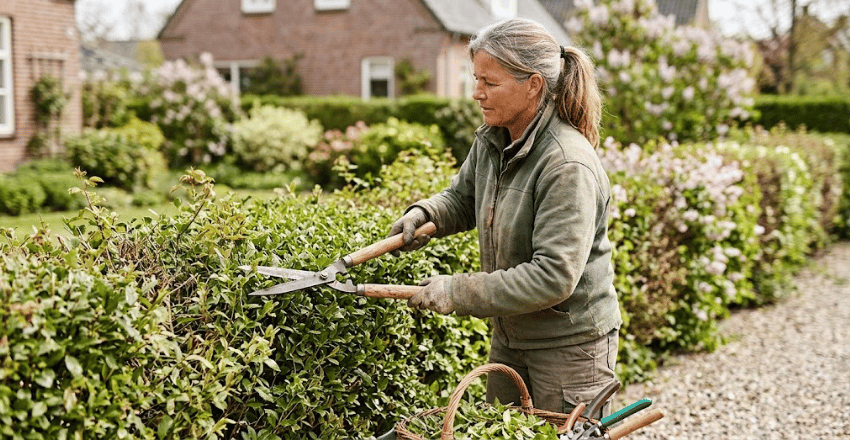
Quick answer: Shape the sides first, working carefully from the bottom upward. Keep the lower portion wider than the top. Use string as a guide when you want straight lines. Make light passes instead of one deep cut, and stop regularly to inspect the shape from several angles.
When Is the Best Time for Hedge Trimming?
The right season depends on the species and when it produces flowers. Spring-flowering shrubs usually form buds on older growth during the previous season. Pruning them too late can remove buds that would produce next year’s flowers.
Summer-flowering plants often bloom on new growth. Many can be pruned during late winter or early spring before active growth begins. Local climate matters, so regional extension guidance can help with unusual species.
Formal screens may need several light cuts during active growth. Informal plantings usually need less frequent attention because their natural outline remains visible. Avoid removing large amounts of healthy growth merely to maintain a perfectly rigid shape.
Tools You Need Before You Start
Your tools should match the branch thickness and the size of the planting. Sharp equipment makes cleaner cuts and requires less effort from the operator. Inspect every blade before starting and clean equipment that has accumulated sap or debris.
Useful equipment includes the following.
- Hand pruners for individual shoots and small branches.
- Loppers for thicker branches.
- Hand shears for small formal plantings.
- Battery, electric, or gas trimmers for larger surfaces.
- Long-reach trimmers for appropriate elevated work.
- String and stakes for straight guidelines.
- Eye protection and work gloves.
- Sturdy shoes with dependable traction.
- Rake, tarp, or collection container for clippings.
Powered equipment is faster, but it is not always the best choice. Large-leaved shrubs can show ragged leaf edges after mechanical shearing. Selective hand pruning often gives those plants a cleaner appearance.
How to Trim Hedges in 7 Practical Steps
1. Identify the Plant Before Cutting
Know what you are growing before choosing a cutting depth or season. Some evergreen species respond poorly when cuts reach older, leafless wood. Flowering plants can also lose an entire bloom cycle after poorly timed pruning.
2. Inspect the Area and Check for Wildlife
Walk around the entire planting before starting any equipment. Look for hidden obstacles, wire, irrigation parts, toys, and unstable ground. Check carefully for active bird nests before disturbing dense foliage.
3. Set the Desired Height and Width
Decide where the finished top and sides should sit before the first cut. Stretch a visible string between stakes when straight edges matter. A guide reduces accidental dips and helps prevent repeated corrective cuts.
4. Shape the Sides With a Wider Base
Begin near the lower portion and work upward using controlled movements. Keep the base slightly wider than the upper growth whenever the species permits. This shape lets more sunlight reach leaves near ground level.
5. Trim the Top With Light Passes
Take off small amounts instead of cutting directly to the final line. Step backward after each section and inspect the top from several viewpoints. Small corrections are easier than repairing a deep notch.
6. Finish Thick or Uneven Areas by Hand
A powered blade may skim across thick stems without producing a clean cut. Use suitable pruners or loppers for branches beyond the trimmer’s intended capacity. Selective cuts can also soften sections that look overly squared.
7. Clear Clippings and Inspect the Finished Shape
Remove loose cuttings from the top and surrounding ground after the work. Check both ends of the planting because uneven sections become easier to see from that angle. Clean and maintain your tools before storing them.
Why the Base Should Be Wider Than the Top
A top-heavy shape blocks light from reaching lower foliage. Those shaded branches can become thin, weak, or bare over time. A modest taper helps maintain fuller growth along the entire face.
This shape is especially useful for formal screens and tightly maintained boundaries. It can also reduce the amount of corrective pruning needed later. In snowy regions, a rounded or slightly shaped top may also reduce heavy accumulation.
Good landscape planning begins long before plants reach mature size. AHomeGuru’s guide on how far to plant trees from your house offers similar planning principles for nearby vegetation. Giving plants suitable space reduces conflicts with roofs, walkways, fences, and other structures.
How Often Should You Trim?
There is no single schedule for every species or U.S. climate. Formal plantings commonly need more frequent attention than loose, natural screens. Growth rate, rainfall, temperature, irrigation, and desired appearance all change the schedule.
A useful approach is to watch new growth rather than follow a rigid calendar. Trim after enough growth appears to disturb the intended form. Light, timely maintenance usually creates better results than waiting for severe overgrowth.
Some university extension programs suggest established formal screens may require several cuts each year. Informal rows can often be managed with fewer sessions. Your plant’s specific pruning needs should always take priority over a generic schedule.
What to Do With an Overgrown Hedge
An overgrown planting should not automatically receive one severe haircut. Some deciduous shrubs tolerate substantial renewal pruning, while many evergreens respond poorly to deep cuts. Identify the species before removing old wood.
For suitable deciduous shrubs, gradual renewal may be safer than aggressive reshaping. Older stems can sometimes be removed over several seasons to encourage younger growth. A badly neglected planting may need professional assessment when its structure is difficult to read.
Never assume brown interior wood will produce new foliage after exposure. Several conifers have limited ability to regrow from old, bare sections. Cutting beyond green growth can leave permanent gaps on sensitive species.
Safety Rules for Powered Trimmers
Keep both hands on equipment designed for two-handed operation. Maintain stable footing and avoid stretching beyond a comfortable working position. Stop the machine before clearing trapped branches or inspecting the cutting blade.
Wear eye protection because clipped stems can travel toward your face. Hearing protection may be appropriate for louder equipment. Gloves and sturdy footwear add protection during handling and cleanup.
Avoid improvised ladder positions when the top is beyond safe reach. A proper long-reach tool can provide better access from the ground. Tall, broad, or difficult plantings may be safer for an experienced professional.
Protect Birds Before Cutting
Dense vegetation can provide nesting places for birds around American homes. The U.S. Fish and Wildlife Service advises that active protected nests containing eggs or chicks should not be destroyed. Inspect foliage carefully before starting noisy or disruptive cutting.
If you find an active nest, postpone work in that section. Give the birds enough distance to continue normal activity. State rules can add further protections, so local requirements may also apply.
This check takes little time and can prevent avoidable harm. It is especially worthwhile when visibility inside dense foliage is poor. Inspect from several angles rather than assuming an outer glance is enough.
Common Trimming Mistakes to Avoid
Many problems come from removing too much material during one session. Homeowners may also create uneven growth by widening the top instead of the base. Repeated deep shearing can make some plants dense outside but sparse internally.
Avoid these common errors.
- Cutting before identifying the species.
- Removing spring flower buds before bloom.
- Making the top wider than the bottom.
- Cutting evergreen growth too deeply.
- Using dull or damaged blades.
- Forcing a trimmer through thick branches.
- Working above a safe reach.
- Ignoring nests hidden inside foliage.
- Skipping cleanup from the plant canopy.
- Trying to correct every uneven spot immediately.
Good outdoor maintenance also means watching how vegetation affects the house. Branches and leaves near roofing can contribute debris and unwanted contact. AHomeGuru’s roof cleaning guide explains why nearby vegetation deserves attention during exterior maintenance.
Formal Versus Informal Hedges
Formal planting depends on repeated shaping to create defined surfaces and straight edges. It usually requires more maintenance because new shoots quickly break the intended outline. String guides and light repeated passes work well for this style.
Informal planting follows the natural structure of the shrubs more closely. Selective pruning replaces much of the repeated surface shearing used on formal designs. This approach can reduce labor while preserving flowers and natural branch patterns.
Neither option is automatically better for every home. The right choice depends on plant species, available space, and your preferred appearance. AHomeGuru’s Gardening section can help connect plant maintenance with broader yard-planning decisions.
Aftercare for Healthier Regrowth
Clean up loose material sitting on the canopy after cutting. Clippings left across dense foliage can block light and hold moisture in unwanted places. Removing them also makes the finished shape easier to inspect.
Monitor soil moisture after substantial pruning during hot or dry weather. Avoid forcing rapid growth with unnecessary fertilizer unless the plant shows a genuine need. Normal watering and suitable soil conditions usually matter more than aggressive feeding.
Keep your equipment clean, sharp, and ready for the next session. Damaged blades can tear stems rather than cutting them cleanly. Regular tool care also makes future maintenance faster and more predictable.
When to Call a Professional
Professional help makes sense when plants are too tall for safe ground-level access. It can also help when thick woody growth exceeds normal residential trimming equipment. Work near power lines requires specialized safety knowledge and should never be treated as routine DIY pruning.
A specialist can also identify whether severely overgrown plants can tolerate major renovation. This matters when evergreen interiors are bare or the original form has disappeared. Replacing the wrong plant can sometimes be smarter than forcing repeated severe pruning.
Consider the surrounding property before major changes. Exterior maintenance often connects with drainage, roofing, walkways, utilities, and long-term landscape design. AHomeGuru’s Exterior section provides additional guidance for coordinating outdoor projects around the home.
Frequently Asked Questions
How much should I remove during hedge trimming?
Remove only enough new growth to restore the desired size and form during routine maintenance. Deep cuts can expose bare interior wood that some species cannot replace. Start conservatively, inspect the result, and make another light pass when needed.
Should I trim the top or sides first?
The sides are a practical starting point for many chest-height formal plantings. Their final angle helps you judge the correct width of the top. Tall or unusual shapes may require a different approach based on safe access.
How do I make the top perfectly straight?
Place stakes at both ends and stretch string along the intended finished line. Keep the cutting blade slightly above the guide so you do not strike it. Step back often because eye-level viewing can hide gradual dips.
Can I cut an evergreen back to bare branches?
That depends on the species and the age of the wood. Many evergreens have limited regrowth after cuts reach old, leafless sections. Identify the plant and confirm its pruning tolerance before making deep cuts.
Is trimming different from pruning?
Trimming usually means light surface cutting that maintains an established size and outline. Pruning can involve more selective removal of individual branches for structure, health, or renewal. A formal screen often receives both treatments at different times.
Keep Your Hedges Neat Without Sacrificing Plant Health
A neat boundary comes from regular, conservative maintenance rather than aggressive cutting. Learn the species, choose the correct season, and preserve a wider base where appropriate. Sharp tools and frequent visual checks help create a cleaner, more balanced result.
Treat safety and plant health as part of the finished appearance. Check for active nests, avoid dangerous reaching, and use the correct tool for each branch. With those habits, your greenery can stay dense, attractive, and easier to maintain for years.