A suet bird feeder gives backyard birds access to a compact, high-energy food source. It works especially well for woodpeckers, nuthatches, chickadees, titmice, wrens, and several other visitors. Choosing the right design also makes cleaning, refilling, and protecting the food easier.
You do not need a complicated feeding station to get good results. A basic wire cage can work well in a suitable location. Larger tail-prop, covered, or squirrel-resistant models solve specific problems as your feeding setup grows.
Direct answer: A good suet feeder securely holds a standard suet cake while giving clinging birds easy access. Choose a durable cage, hang it where birds have nearby cover, and keep it away from intense heat. Clean the feeder every one or two weeks and replace spoiled or softened food promptly.
Suet Feeder Quick Facts
| Feature | What to Know |
|---|---|
| Main food | Rendered suet cakes, plugs, nuggets, or similar high-energy foods |
| Common visitors | Woodpeckers, chickadees, nuthatches, titmice, wrens, jays |
| Basic feeder style | Coated metal wire cage |
| Useful upgrade | Tail prop for larger woodpeckers |
| Weather feature | Roof or shield that reduces rain exposure |
| Cleaning schedule | About every one or two weeks, or sooner when dirty |
| Best conditions | Cool and moderate weather |
| Hot-weather concern | Suet can soften, spoil, or coat feathers |
| Common pest issue | Squirrels and larger nuisance birds |
| Typical capacity | One or two standard suet cakes |
Key Takeaways
- Basic cage feeders are inexpensive and work for many clinging birds.
- Tail-prop models give larger woodpeckers more support while feeding.
- Covered feeders can help protect food from rain and direct sun.
- Upside-down designs may discourage some larger birds.
- Suet should stay fresh, dry, and firm enough to avoid coating feathers.
- Regular cleaning reduces old food, grease, debris, and potential pathogens.
- Placement should balance visibility, nearby cover, shade, and predator awareness.
What Is a Suet Bird Feeder?
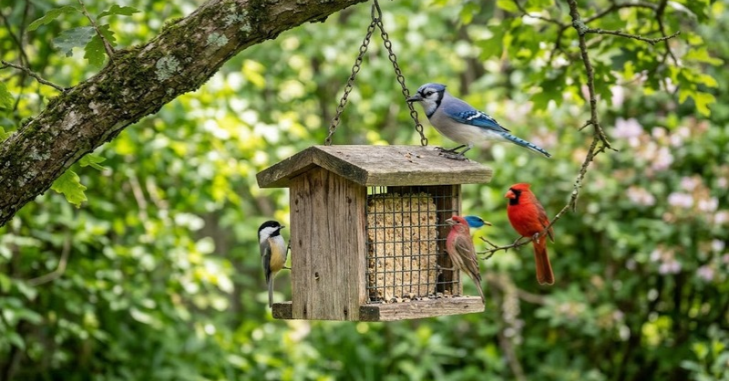
A suet bird feeder is designed to hold dense blocks or portions of high-energy bird food. Most models use metal mesh that lets birds cling while taking small bites. The food remains contained instead of sitting loose on a platform.
Traditional suet comes from animal fat, but commercial bird cakes usually contain rendered fat with seeds or other ingredients. The Cornell Lab notes that this food attracts species that do not always visit ordinary seed feeders. That makes it useful when you want more variety around your yard.
The feeder itself can be simple or highly specialized. Some models hold one cake, while others carry two or more. You will also find tail props, weather guards, protective cages, and upside-down feeding surfaces.
Which Birds Eat Suet?
Woodpeckers are among the most familiar visitors at these feeders. Downy, hairy, red-bellied, and larger woodpeckers may all investigate a suitable feeding station. Their strong feet make clinging to mesh natural.
Chickadees, nuthatches, and titmice also use this food regularly. Wrens, jays, starlings, and several other species may appear depending on your region. Local habitat and season affect which birds you see.
A feeding station cannot guarantee a particular species. Birds first need to live within your local area and discover the food. Nearby trees, shrubs, water, and natural habitat can make a yard more attractive.
For more outdoor planning ideas, AHomeGuru’s gardening content can help you build a yard that supports both plants and wildlife. Trees and other vegetation can provide useful resting and escape cover. Thoughtful landscaping also makes a feeding area feel more connected to the yard.
7 Things to Look for When Choosing a Suet Feeder
1. Pick a Durable Cage
A coated steel cage is a practical starting point for most homeowners. The mesh needs to hold the cake firmly without blocking birds from reaching it. A secure latch also prevents the feeder from opening accidentally.
Check how easily the cage opens before buying. Complicated clips become frustrating during cold weather or frequent refills. Simple construction also leaves fewer spaces where old grease can collect.
2. Consider a Tail Prop for Woodpeckers
Larger woodpeckers often brace their stiff tails against tree trunks while feeding. A tail-prop feeder adds a vertical board below the food cage. This extra surface can create a more natural feeding posture.
Small birds do not require a large prop. Homeowners hoping to attract larger woodpeckers may find one worthwhile. Make sure the board uses weather-resistant material and remains easy to clean.
3. Add Weather Protection
A roof or shield can reduce direct exposure to rain and snow. It can also create shade during parts of the day. The food may stay usable longer when it is protected from repeated wetting.
Weather protection does not eliminate maintenance. Moisture can still reach exposed edges and crumbs. Check the food after storms and replace anything that smells stale or looks questionable.
4. Match Capacity to Bird Activity
A one-cake feeder suits many small yards. Larger models can hold two or more cakes when bird traffic is heavy. Extra capacity also reduces how frequently you need to refill.
More food is not always better. Cakes that remain outside too long can deteriorate before birds finish them. Start with a smaller amount and increase capacity after you see steady activity.
5. Look for Easy Cleaning
Project FeederWatch recommends cleaning seed and suet feeders regularly, such as every week or two. Heavy use and wet weather may require more frequent cleaning. Removable cages and simple hinges make this routine easier.
Scrub away food residue with warm water and dish soap. Rinse the parts thoroughly before allowing them to dry. A clean feeder gives old grease and debris fewer places to accumulate.
6. Think About Squirrels
Squirrels often enjoy high-fat food as much as birds do. A basic cage may not stop a determined squirrel. Placement and feeder design become important if squirrels repeatedly empty the food.
Protective outer cages can limit access to smaller birds. Some feeders also use baffles or weight-sensitive features. No setup works perfectly in every yard, so observe local behavior before upgrading.
7. Check How the Feeder Hangs
Look for a strong hook, cable, or mounting point. The feeder should remain stable during normal wind and bird activity. Weak hardware can bend after repeated outdoor exposure.
Tree placement also deserves thought. AHomeGuru’s guide to how far trees should be planted from a house explains why mature tree size matters around residential structures. The same planning mindset helps when choosing a safe feeding area.
Where Should You Hang It?
Choose a place that birds can spot without leaving them exposed for long periods. Nearby trees or shrubs can provide quick cover after feeding. Avoid positioning the feeder where a hidden cat can easily ambush birds.
Visibility from a window is useful if birdwatching is part of your goal. Keep the surrounding area practical for cleaning spilled crumbs or dropped pieces. The location should also let you remove the feeder without climbing dangerously.
Shade becomes more important during warm weather. Direct afternoon sun can heat both the feeder and its contents. A sheltered location can slow softening, although temperature still matters.
Can You Use Suet During Summer?
Cold weather is where this food is most useful and easiest to manage. The Cornell Lab warns that suet can soften in high temperatures and potentially foul bird feathers. Raw or homemade versions are especially unsuitable for hot weather.
Some commercial cakes are sold as heat-resistant or no-melt products. That does not mean they can remain outside indefinitely during extreme heat. Check the food frequently for softness, odor, mold, or deterioration.
If summer temperatures become intense, removing the feeder can be the safer choice. A shaded feeding area also performs better than one exposed to afternoon sun. Homeowners improving backyard shade can read AHomeGuru’s sun shade sail guide for related planning ideas.
How to Keep Suet Fresh and Safe
Only put out an amount birds can finish within a reasonable period. Check the cake after rain, unusually warm days, or long stretches without bird activity. Discard food that appears spoiled rather than trying to save it.
Cleaning is equally important. Grease, crumbs, feathers, and droppings can build up around feeding surfaces. Regular washing keeps the station easier to inspect and maintain.
Watch bird behavior while you are outside. A sudden drop in visits can have many explanations, including weather or natural food availability. It is still worth checking whether the food has become wet, stale, or difficult to reach.
Common Suet Feeder Problems and Solutions
| Problem | Likely Cause | Practical Fix |
|---|---|---|
| Birds ignore the feeder | New location or poor visibility | Allow time and place it near suitable cover |
| Suet becomes soft | High temperature or direct sun | Move to shade or remove during hot weather |
| Food gets wet | Rain reaches exposed cake | Use a covered model |
| Squirrels empty it | Easy climbing access | Add a baffle or protected cage |
| Large birds dominate | Open cage design | Try an upside-down feeding model |
| Feeder smells greasy | Old residue remains | Wash and dry it thoroughly |
| Cake lasts too long | Low activity or excess capacity | Put out less food |
| Feeder swings heavily | Weak hanger or exposed location | Use stronger mounting hardware |
Cage, Tail-Prop, or Upside-Down Feeder?
A basic cage is the most straightforward choice for beginners. It is inexpensive, easy to refill, and suitable for many common visitors. Start there if you are learning which birds use your yard.
A tail-prop model better suits homeowners targeting larger woodpeckers. The extended back gives those birds a surface for tail support. It can also make longer feeding sessions more comfortable.
Upside-down feeders offer food from the underside of the cage. Agile clinging birds can handle this position more easily than many larger competitors. The Cornell Lab recommends this design when homeowners want to discourage some jays or starlings.
No single style wins for every backyard. Your bird population, squirrel activity, weather, and preferred species should guide the choice. Starting simple lets you identify problems before spending more money.
How Much Should You Spend?
Simple wire cages commonly sit at the low end of the market. Larger covered models, tail-prop designs, and squirrel-resistant products cost more. Current U.S. retail listings show options ranging from inexpensive single-cake cages to specialty feeders costing considerably more.
Price should not be your only measure of quality. A sturdy latch, weather-resistant materials, and easy cleaning matter more than decorative details. Buy the simplest model that solves the problems you expect.
You can upgrade later if bird traffic increases. This approach avoids paying for features your yard may not need. It also gives you time to learn which species visit regularly.
Choosing the Right Feeder for Your Yard
Start with the birds you hope to attract and the conditions around your home. A simple cage works for many yards, while tail props or protected models solve more specific problems. Easy cleaning should remain a priority regardless of style.
Placement matters almost as much as the feeder itself. Give birds reasonable access to nearby cover while keeping predators and intense sun in mind. Then watch how birds interact with the setup before making changes.
A well-maintained feeding station can add year-round interest to a backyard. Keep the food fresh, monitor weather conditions, and clean the hardware on a regular schedule. Those habits matter more than buying the most expensive model.
Frequently Asked Questions
What birds are attracted to a suet bird feeder?
Woodpeckers, chickadees, nuthatches, titmice, wrens, and jays commonly eat suet in the United States. Other birds may visit depending on your region and habitat. Nearby trees and shrubs can increase the usefulness of the feeding area.
Where is the best place to hang a suet feeder?
Choose a visible location near useful cover without placing the feeder beside a predator hiding spot. Shade can help during warmer periods. The feeder should also remain easy for you to reach and clean.
How often should I clean the feeder?
Project FeederWatch recommends regular cleaning, such as every week or two. Wet weather or heavy bird use can justify more frequent washing. Remove residue, wash with warm soapy water, rinse thoroughly, and let everything dry.
Should I stop feeding suet in hot weather?
Removing it during high heat is often sensible. Warm conditions can soften fat, encourage spoilage, and create a risk of greasy feathers. Heat-resistant products still require regular inspection.
Do squirrels eat suet?
Yes, squirrels can be strongly attracted to it. A baffle, protected outer cage, or harder-to-reach mounting position may reduce access. Observe how squirrels approach before choosing a specific deterrent.
Are covered feeders better?
A roof can help protect food from rain, snow, and some direct sunlight. It does not make the contents maintenance-free. You still need to inspect the cake and clean the feeder regularly.