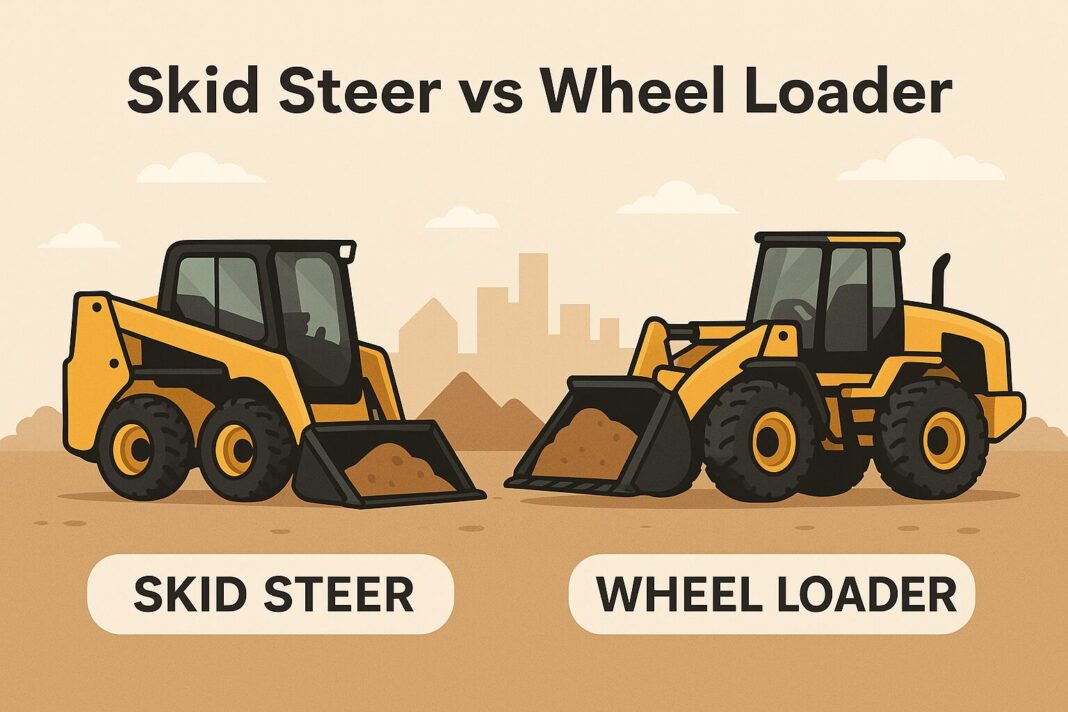

When you’re planning a construction, landscaping, or material-moving project, choosing the right equipment can directly impact efficiency, cost, and workflow. Two of the most commonly compared machines for these types of tasks are the skid steer and the wheel loader. While both machines are designed to move, lift, and transport materials, they serve different purposes and are best suited for different environments.
So, how do you choose between a skid steer and a wheel loader? The answer depends on several factors, including jobsite conditions, material types, project size, and operator preference. This guide breaks down the pros and cons of each machine to help you determine which one is the best fit—and when a wheel loader rental might make more sense than going with a skid steer.
Understanding the Basics
Before comparing capabilities, it helps to understand what each machine is built to do.
What Is a Skid Steer?
A skid steer is a compact, highly maneuverable machine known for its tight turning radius. It’s ideal for small or confined job sites and is widely used in landscaping, residential construction, and property maintenance. It typically has a bucket in front but can be outfitted with dozens of attachments.
What Is a Wheel Loader?
A wheel loader is a larger, more powerful machine designed for moving large volumes of material. It has a front-mounted bucket, articulated steering, and a higher reach, making it popular on large construction sites, roadwork projects, and industrial yards.
Project Size and Scope
The first thing to consider is the scale of your project. Skid steers excel in tight quarters and smaller job sites, while wheel loaders shine on larger, open spaces.
When to Use a Skid Steer:
- Small-scale landscaping projects
- Residential construction sites with limited space
- Jobs requiring multiple attachments (e.g., trenchers, augers, sweepers)
- Indoor demolition or barn cleanouts
When to Use a Wheel Loader:
- Large-scale earthmoving projects
- Road construction or municipal work
- Jobs that require high lift capacity or reach
- Moving heavy materials across open sites
If your job involves a mix of tasks and a more expansive site layout, a wheel loader rental may provide more value by covering greater ground with fewer passes.
Material Handling and Lift Capacity
Another important distinction between the two machines is how much material they can lift and transport at one time. Wheel loaders have a clear advantage here, especially when dealing with heavy aggregates, soil, or debris.
Skid Steer:
- Lower lift capacity (generally up to 3,000 lbs)
- Limited bucket size
- Ideal for lighter materials and precision tasks
Wheel Loader:
- Higher lift capacity (4,000 lbs and up)
- Larger bucket sizes, better suited for bulk movement
- Better suited for repetitive heavy lifting
If your project involves hauling a high volume of material, choosing a wheel loader rental can help complete the job faster and more efficiently.
Terrain and Jobsite Conditions
The type of surface you’re working on also plays a big role in your equipment decision.
Skid Steer Advantages:
- Better for uneven or narrow terrain
- Can maneuver through tight alleyways or indoor spaces
- Available in wheeled and tracked versions for soft or muddy ground
Wheel Loader Advantages:
- Handles rough or wide-open terrain with ease
- Offers more ground clearance and stability
- Less wear and tear when operated on large, rugged job sites
If your jobsite has plenty of space and calls for smooth operation over uneven ground, a wheel loader rental provides better stability and power to handle it.
Attachment Versatility
Both machines support attachments, but skid steers tend to offer more flexibility when it comes to switching tools quickly.
Skid Steer:
- Compatible with dozens of attachments like augers, breakers, brush cutters, pallet forks, and more
- Quick-attach systems allow fast changes on the job
- Excellent for multi-tasking on dynamic sites
Wheel Loader:
- Fewer attachments overall, but still compatible with material-specific tools (e.g., forks, grapple buckets, snow pushers)
- Requires more time to swap out attachments
- Primarily designed for high-volume material movement
If versatility is more important than raw power for your project, a skid steer may be the better choice.
Transportation and Access
Transporting the equipment to your jobsite and navigating around it is also a major consideration.
Skid Steer:
- Easier to transport on smaller trailers
- Can access hard-to-reach or confined spaces
- More convenient for projects in residential or urban settings
Wheel Loader:
- Requires a larger trailer or flatbed
- May need more space for maneuvering and operation
- Better suited for industrial or rural sites with fewer access restrictions
For jobs with limited site access or parking constraints, a skid steer will likely be the more manageable choice.
Operator Comfort and Productivity
Operator fatigue is a real concern on long shifts, so comfort can directly impact productivity. Wheel loaders tend to offer a smoother ride and better cab visibility.
Skid Steer:
- Smaller cab, less insulation from noise and vibration
- Controls are often simple and intuitive
- Good visibility in tight spaces
Wheel Loader:
- Spacious cab with ergonomic controls
- Smoother ride over uneven terrain
- High seat position for better visibility on open sites
If your job involves long operating hours, the comfort of a wheel loader could boost efficiency and reduce operator fatigue.
Cost Considerations
Skid steers are generally more affordable to rent, making them ideal for short-term or small-budget projects. Wheel loaders, on the other hand, offer more value for large-scale work that justifies the higher cost.
Skid Steer Rental Range:
- Daily: $200–$350
- Weekly: $700–$1,200
- Monthly: $2,000–$3,500
Wheel Loader Rental Range:
- Daily: $500–$1,000
- Weekly: $1,800–$3,500
- Monthly: $5,000–$10,000
Before making a decision, get quotes from multiple providers and weigh your equipment needs against total operating time. When heavy-duty power and productivity are top priorities, investing in a wheel loader rental can be a smart, cost-effective choice.
Final Thoughts
Choosing between a skid steer and a wheel loader comes down to the specific needs of your project. If your focus is on agility, versatility, and working in compact spaces, a skid steer is the logical pick. But for large projects that involve heavy lifting, high-volume material movement, or open terrain, a wheel loader rental may deliver greater efficiency and value.
Take the time to assess your site layout, material needs, and task list before making a decision. When in doubt, consult your rental provider—they can help you compare models, review specifications, and ensure you’re renting the right machine to get the job done right.
Apart from that if you want to know about “Window Sill Plant Shelf: Enhancing Your Space With Natural Beauty” then please visit our “Landscaping” Category.