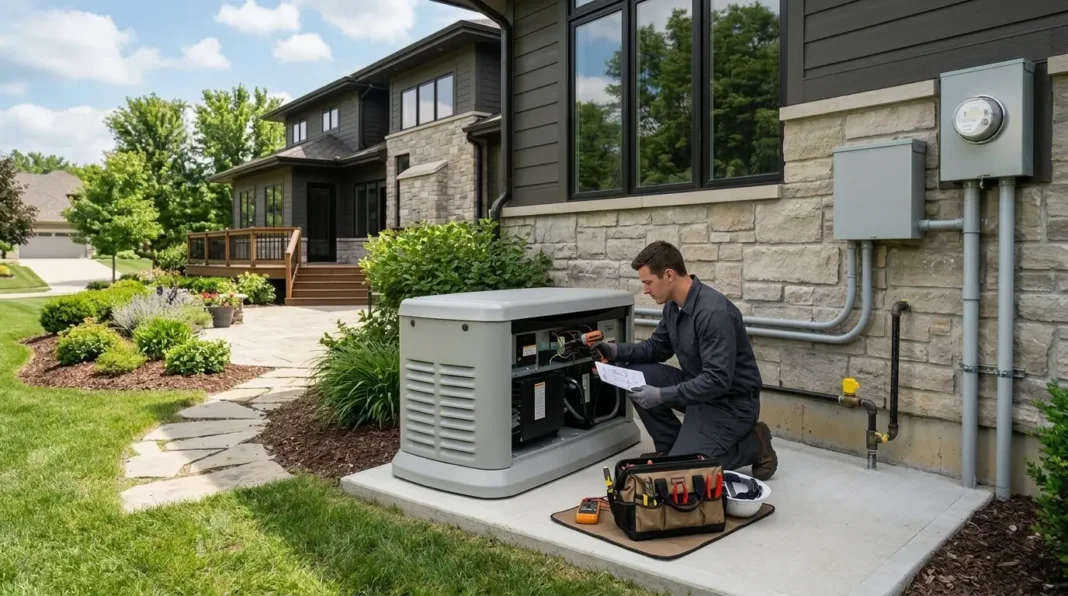

Generator installation can give your home dependable backup power when the utility grid fails. A permanent standby system can start automatically and supply selected circuits or most household loads. Proper planning matters because electrical work, fuel connections, placement, permits, and inspections all affect the finished system.
Direct answer: A typical home generator installation includes load sizing, site selection, permits, a stable base, fuel connections, transfer equipment, electrical work, inspections, and final testing. U.S. homeowners should use qualified professionals for service-panel connections, transfer equipment, and permanent gas or propane work.
| Planning point | What U.S. homeowners should know |
|---|---|
| Typical standby system cost | Often about $8,000–$16,000 including equipment and installation |
| Main cost factors | Unit size, electrical work, fuel supply, trenching, permits, and site conditions |
| Transfer equipment | Prevents unsafe power flow between the home and utility system |
| Permits | Electrical and fuel-related permits commonly apply; local rules vary |
| Physical installation | Often completed within one to three working days |
| Full project timeline | Permitting, equipment, utility work, and inspections can add several weeks |
| Portable unit placement | At least 20 feet from the home, with exhaust directed away |
| Best first step | Determine which household loads need backup power |
Key Takeaways
- Decide whether you need essential-circuit backup or broader whole-house coverage.
- Get a load assessment before selecting equipment based only on advertised wattage.
- Permanent standby systems usually require electrical and fuel-related professional work.
- Local permit, zoning, setback, and inspection requirements can change the project.
- Compare contractor quotes using the same written scope instead of comparing totals alone.
- Portable units must remain outdoors and away from doors, windows, vents, and occupied spaces.
- Never connect temporary equipment to household wiring in a way that can backfeed utility lines.
Generator Installation Starts With the Right Backup Plan
Start by deciding what must keep working during an outage. Refrigeration, lighting, heating controls, sump pumps, well pumps, and medical equipment may take priority. Central air conditioning and electric heating can increase the required capacity substantially.
A whole-home system does not always need to power every appliance simultaneously. Load-management equipment can temporarily prioritize or shed large electrical loads. A qualified installer can determine whether that approach suits your electrical service and household needs.
Avoid choosing capacity from home square footage alone. Two similar houses can have completely different electrical demands. Appliance types, starting loads, heating systems, pumps, and service size can change the calculation.
Standby vs. Portable Power: Understand the Difference
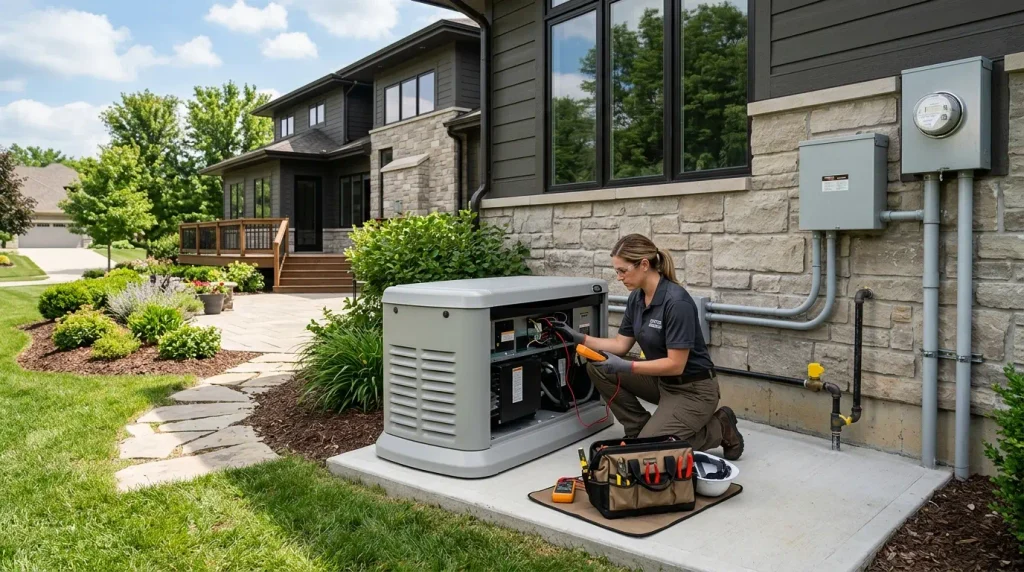
A standby unit remains permanently installed outside the home and uses a fixed fuel supply. It normally works with automatic transfer equipment that detects utility loss. This setup suits homeowners who want backup power without manually starting equipment during every outage.
Portable equipment costs less and offers more flexibility. It normally requires manual setup, fueling, and safe outdoor placement during an outage. A professionally installed inlet and approved transfer method can provide a safer household connection than improvised wiring.
Never use a portable unit inside a garage, basement, shed, or home. The U.S. Consumer Product Safety Commission says portable units should operate at least 20 feet from the house. Exhaust should also point away from buildings, windows, doors, and vents.
How Much Does Home Backup Power Installation Cost?
Current national estimates vary because contractors include different items in their prices. Generac currently states that home standby systems average about $8,000 to $16,000, including the unit. Other 2026 cost guides show wider ranges when complex fuel, panel, trenching, or site work is included.
| Cost component | What can affect the price |
|---|---|
| Backup unit | Output capacity, fuel type, brand, and included controls |
| Transfer equipment | Service size, panel configuration, and backup scope |
| Electrical labor | Cable distance, panel condition, trenching, and service changes |
| Fuel connection | Gas capacity, pipe length, propane equipment, and regulators |
| Base or pad | Site grading, drainage, anchoring, and local requirements |
| Permits | City or county requirements and number of required permits |
| Site restoration | Landscaping, concrete, paving, or trench repairs |
The equipment price therefore tells only part of the story. Long conduit routes or fuel lines can increase labor and materials quickly. Existing electrical panels may also require modifications before backup equipment can be connected.
Request itemized estimates from two or three qualified contractors. Each estimate should cover the same equipment, permits, transfer equipment, fuel work, testing, and cleanup. A lower quote offers little value if major parts of the job appear later as extras.
8 Steps in a Professional Home Backup Power Project
The exact sequence varies by property and jurisdiction. Still, most permanent residential projects follow a similar path. Understanding that sequence makes contractor proposals easier to compare.
- Assess the electrical loads. Decide which circuits and appliances require backup power during an outage.
- Select suitable equipment. Match output capacity, fuel type, controls, and transfer equipment to the planned loads.
- Choose a compliant location. Review manufacturer clearances, local setbacks, exhaust direction, drainage, and service access.
- Obtain required approvals. Confirm electrical, building, mechanical, fuel-gas, zoning, HOA, or utility requirements where applicable.
- Prepare the base. Install the approved concrete, composite, or other manufacturer-specified mounting system.
- Complete fuel work. A qualified professional connects natural gas or propane equipment and checks supply capacity.
- Complete electrical work. The electrician installs approved transfer equipment and makes the required panel connections.
- Inspect and test everything. Final commissioning should include startup checks and a simulated utility outage.
This process explains why installation is more involved than placing equipment beside the house. Several trades and inspections may need coordinated schedules. Permit approval or utility work can take longer than the physical installation itself.
Homeowners planning other renovation work can see a similar permit-first approach in AHomeGuru’s bathtub installation guide. That project also shows why hidden electrical, structural, or utility work should be reviewed before finishes are closed. Planning early can reduce expensive rework.
Permits and Code Requirements in the United States
There is no single permit process that applies to every American home. Cities, counties, states, utilities, and homeowners associations can impose different requirements. Permanent installations commonly involve electrical permits and may also need fuel-gas, mechanical, building, or zoning approval.
Ask the local authority having jurisdiction about requirements before work begins. The contractor should also explain who pulls each permit and schedules each inspection. Keep approved plans, equipment specifications, inspection records, and warranty documents with your home records.
Placement requirements deserve the same attention as electrical rules. Clearances can depend on the equipment listing, manufacturer instructions, openings, combustible surfaces, and local amendments. Do not rely on a generic setback found online for a specific model.
For other outdoor home projects, AHomeGuru’s exterior section provides related planning information. Outdoor equipment can affect access, landscaping, drainage, and future maintenance. Those factors should be considered before a permanent location is approved.
Why a Transfer Switch Matters
Transfer equipment separates utility power from backup power during operation. That separation prevents electricity from being sent unexpectedly onto utility lines. Improvised connections can create severe shock, fire, equipment, and utility-worker hazards.
Automatic transfer equipment is commonly paired with permanent standby systems. Portable setups may use an approved manual transfer method or compatible interlock arrangement. The correct design depends on the panel, equipment, local rules, and electrical configuration.
This part of the project is not a good place for guesswork. Service-panel work can expose a person to dangerous electrical energy. Use a qualified electrician and have required work inspected before operation.
AHomeGuru’s guide to hiding wires from a mounted TV also discusses checking local rules before routing wiring inside walls. Backup power work carries much greater electrical consequences. Permanent service connections deserve professional planning and code review.
Choosing a Safe Location
The best location balances safety, code compliance, cost, drainage, noise, and maintenance access. Longer electrical or fuel runs can increase project costs. Yet choosing the shortest route should never override required clearances or safe exhaust placement.
Keep the equipment away from areas that collect water. The location should also remain accessible for inspection, maintenance, and repairs. Snow, vegetation, fences, stored materials, and future landscaping should not block required airflow.
Portable equipment requires different placement considerations. CPSC and EPA guidance says fuel-powered portable units should stay at least 20 feet from buildings outdoors. The exhaust must face away from the home and nearby occupied structures.
Common Mistakes That Increase Cost or Risk
Homeowners can avoid several problems by settling important details before signing a contract. The cheapest proposal may exclude permits, fuel upgrades, trench restoration, or transfer equipment. Compare written scopes rather than relying on the final price alone.
Common problems include:
- Buying equipment before completing a household load assessment.
- Assuming the existing natural-gas service can supply the required fuel.
- Selecting a location before checking setbacks and manufacturer clearances.
- Ignoring drainage, snow, vegetation, or maintenance access.
- Comparing quotes that cover different equipment and labor.
- Failing to confirm permit and inspection responsibility.
- Using unsafe temporary wiring during an outage.
- Operating portable equipment too close to occupied buildings.
Planning the surrounding area also matters when equipment sits near a garage. AHomeGuru’s garage organization guide can help with general space planning. Never operate a portable fuel-powered unit inside the garage, even with the door open.
How Long Does the Project Take?
The physical work may take only a few working days for a straightforward project. The complete timeline can be much longer because approvals and scheduling happen beforehand. Permit reviews, equipment availability, utility coordination, and inspections can add several weeks.
Ask contractors to separate working time from total project time. This distinction makes estimates easier to understand and compare. It also helps homeowners plan around hurricane, winter storm, or severe-weather seasons.
Do not postpone required inspections to speed up the schedule. An inspected installation provides documentation that the permitted work was reviewed. Keep final approvals with the equipment manuals and service records.
What to Ask Before Hiring an Installer
A detailed quote should identify the exact model and rated output. It should also state the transfer equipment, fuel work, electrical scope, permits, base, and testing. Ask whether trenching, restoration, batteries, startup, and warranty registration are included.
Before hiring, ask these questions:
- What household loads does the proposed system support?
- What load calculation supports the recommended capacity?
- Which permits and inspections are required?
- Who handles permit applications and inspection scheduling?
- Does my gas service or propane supply need changes?
- What transfer equipment is included?
- Are trenching and site restoration included?
- What work could create additional charges?
- Who provides future maintenance and warranty service?
Get answers in writing before paying a large deposit. Contractors should be able to explain the proposed system without relying on vague package descriptions. Clear documentation makes competing proposals easier to compare.
Final Homeowner Checklist
A successful project begins with the loads you need to protect, not the largest equipment available. Confirm sizing, placement, permits, fuel capacity, transfer equipment, inspections, and testing before commissioning. Keep the final documentation where it can be found during future service or a home sale.
For permanent systems, use qualified trades for electrical and fuel connections. For portable equipment, follow current CPSC safety guidance every time it runs. Good preparation makes backup power safer and easier to manage when the grid goes down.
Frequently Asked Questions
How much does generator installation cost?
A permanent standby system commonly costs several thousand dollars once equipment and labor are combined. Generac currently cites an average range around $8,000 to $16,000 including the unit. Site conditions, capacity, fuel work, panel changes, permits, and regional labor rates can move the price outside that range.
Do I need a permit for a home standby system?
Permanent installations commonly require at least an electrical permit. Fuel, mechanical, building, zoning, or other approvals may also apply locally. Ask your city or county building department and contractor before work begins.
Can I install a whole-house standby system myself?
Some site preparation may be suitable for experienced homeowners where local rules allow it. Electrical service connections and permanent fuel piping involve serious hazards and regulated work. Licensed professionals should handle those portions when required by local law or the project scope.
How far should a portable unit be from my house?
The U.S. Consumer Product Safety Commission recommends operating portable units outdoors at least 20 feet from the home. Exhaust should point away from the house and nearby buildings. Never run one inside a garage, basement, shed, porch, carport, or living space.
How do I choose the right size?
Start with the circuits and appliances you need during an outage. Account for both normal running demand and equipment starting loads. A professional load assessment can determine whether full coverage or managed essential loads make more sense.
What should happen before the installer leaves?
The contractor should complete required inspections and commissioning checks. A permanent standby system should also be tested under simulated outage conditions. Collect manuals, warranty details, model information, maintenance instructions, and final permit records before closing the project.