
The right garage door lubricant can quiet squeaks, reduce friction, and protect moving hardware. Silicone spray and white lithium products handle most residential maintenance needs well. The correct choice depends on the part, material, climate, and opener design. Regular lubrication is simple, but careless spraying can create new problems.
Tracks generally need cleaning instead of a greasy coating. Springs also deserve caution because their stored tension can cause serious injuries.
| Maintenance Question | Practical Answer |
|---|---|
| Preferred lubricant types | Silicone spray or suitable white lithium lubricant |
| Good application points | Metal hinges, roller bearings, springs, bearing plates |
| Tracks | Keep clean and generally dry. |
| Nylon rollers | Lubricate the stem or bearing area, not the nylon wheel. |
| Belt-drive opener | Do not lubricate the belt. |
| Screw-drive opener | Use the lubricant specified by the manufacturer. |
| Typical maintenance interval | Follow the door and opener manuals; inspect at least annually. |
| Biggest safety concern | Springs and other components under high tension |
Quick answer: Choose a silicone-based spray for clean, versatile home maintenance. White lithium works well on suitable loaded metal contact points. Apply a light coating to approved moving parts, wipe away excess, and keep tracks clean. Always check your manufacturer’s instructions before treating springs, rollers, or opener components.
Which Lubricant Type Should You Choose?
Silicone spray is a strong general-purpose choice for many residential doors. It reaches narrow pivots and leaves a relatively light film. It also works across changing temperatures better than many ordinary household oils. White lithium products create a thicker lubricating layer on suitable metal contact surfaces. That extra cling can help where metal parts carry more load.
Product instructions still matter because hardware materials and opener designs vary. Standard penetrating sprays should not automatically replace a purpose-made lubricant. Some products clean, displace water, or loosen corrosion better than they provide lasting lubrication. A temporary reduction in noise does not always mean the part received proper protection.
| Lubricant Type | Strongest Use | Advantages | Limitations |
|---|---|---|---|
| Silicone spray | General moving hardware | Clean application, good reach, moisture resistance | May need periodic reapplication |
| White lithium | Suitable for metal contact points | Clings well and reduces metal friction | Can collect more dust if overapplied |
| Light manufacturer-approved oil | Certain hinges or bearings | Easy to place in tight areas | May not last as long |
| Standard multipurpose penetrant | Cleaning or freeing stuck parts | Useful for corrosion-related jobs | Often unsuitable as long-term lubrication |
Recommendation: Start with a purpose-made silicone spray unless your manufacturer specifies another product. Use white lithium where the hardware manual permits thicker grease. Never assume one product belongs on every moving component.
How to Choose a Garage Door Lubricant for Each Part
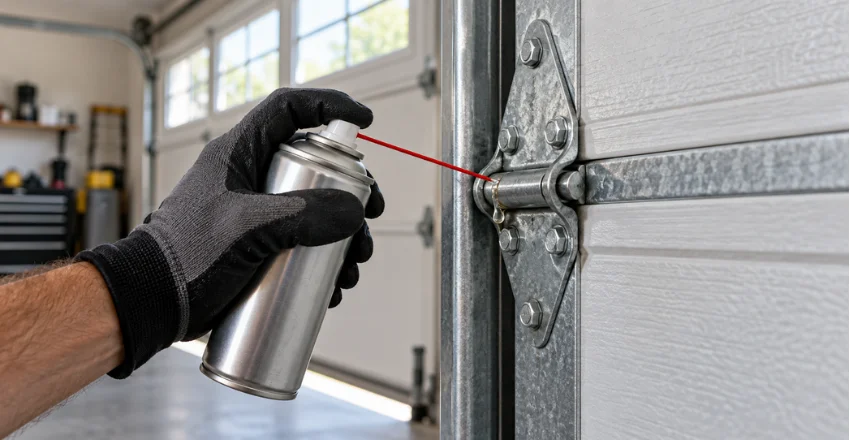
Hinges need lubricant at their moving pivot points rather than across their entire surfaces. A narrow spray straw helps control placement and reduces overspray. Wipe away drips before they collect dust. Roller treatment depends on the roller design. Unsealed metal bearings can usually receive suitable lubricant at the bearing area. Nylon wheels should not be coated across their rolling surfaces.
Torsion springs may receive a light coating when the manufacturer recommends lubrication. You should never loosen, adjust, remove, or dismantle a spring during routine maintenance. Springs store substantial energy and should be repaired by trained professionals. Bearing plates and other rotating metal interfaces can also need lubrication.
Use only enough product to form a light protective film. Heavy application creates drips and can hold dirt against moving surfaces.
Should You Lubricate the Tracks?
Most residential tracks should be cleaned rather than covered with lubricant. Dirt, hardened residue, and debris can interfere with smooth roller travel. A clean cloth or suitable brush can remove that buildup. Lubricating the track surface can leave a film that collects dust and grit. The rollers should roll through the channel rather than slide through grease.
Several current maintenance guides therefore recommend concentrating lubricant on moving bearings and pivots instead. If rollers scrape after the tracks are clean, inspect the system carefully. A bent channel, worn roller, loose fastener, or alignment problem may be responsible. Lubricant cannot correct damaged hardware.
How to Lubricate the Door in 7 Steps
Routine lubrication works best after a basic inspection and cleaning. Keep your hands away from cables, spring adjustments, and loaded brackets. Stop immediately if you find broken, loose, or badly worn components.
- Close the door completely. Disconnect electrical power to the automatic opener before maintenance.
- Clean loose dirt first. Wipe hinges, roller areas, tracks, and accessible metal surfaces.
- Treat hinge pivot points. Apply a small amount where each approved metal hinge rotates.
- Lubricate roller bearings or stems. Avoid coating nylon wheel surfaces with grease.
- Lightly treat approved spring surfaces. Never adjust spring tension or dismantle spring hardware.
- Check the opener type. Follow its manual before lubricating chains, screws, trolleys, or other drive parts.
- Restore power and test operation. Cycle the system and wipe away visible excess product.
Genie advises unplugging the automatic opener during planned maintenance. The company also warns that spring assemblies remain under extreme tension. These precautions matter even during simple cleaning and lubrication.
Chain, Belt, and Screw-Drive Openers Need Different Care
A chain-drive opener may have different maintenance requirements from the door hardware itself. Genie advises lubrication for certain chain-drive components in its maintenance guidance. Your model manual should remain the final authority. Do not lubricate the belt on belt-drive systems. Oil or grease can harm materials or interfere with normal operation. Treat the door hardware separately from the opener drive system.
Screw-drive units often need a specific grease applied along the drive screw. Genie instructs owners of compatible models to clean the screw first. It then recommends a small bead of specified lubricant before cycling the system.
How Often Should You Lubricate Moving Parts?
A universal schedule does not fit every home. Climate, usage, hardware design, and product instructions all affect the correct interval. Many manufacturers recommend at least an annual inspection and maintenance routine. Clopay recommends annual lubrication for several residential moving components in its maintenance guidance. Other situations may require more frequent attention because of heavy use or harsh conditions.
Always follow your own manuals before adopting a generic schedule. Pay attention to changes between scheduled checks. New squeaking, grinding, jerky travel, or visible corrosion can signal a developing issue. Persistent noise after proper lubrication deserves closer inspection.
Common Lubrication Mistakes to Avoid
Using too much product is one of the easiest mistakes to make. More lubricant does not automatically create better protection. Excess material drips, spreads, and traps grime. Another mistake is treating every surface with the same spray. Plastic hinges, nylon rollers, rubber seals, and opener components may have different requirements. Manufacturer-specific instructions should override general maintenance advice.
Homeowners also sometimes mistake lubrication for repair. A door that feels unusually heavy may have a balance or spring problem. A crooked track or frayed cable also requires more than routine maintenance.
When Lubrication Will Not Fix the Problem
Grinding that continues after careful maintenance can indicate worn bearings or rollers. Jerky travel can point toward alignment, balance, or opener problems. Repeated binding needs diagnosis rather than another layer of spray. Never attempt spring adjustment because the door still feels heavy. Clopay specifically recommends professional service for springs, tracks, and several complicated components. That boundary protects both the homeowner and the equipment.
A tidy work area also makes maintenance easier. AHomeGuru’s garage organization advice explains how storage zones and vertical storage can keep floor space usable. Better access helps you inspect equipment without working around stacked clutter.
Clean the Garage Before You Start
Dust and debris can work their way into moving hardware over time. Cleaning before lubrication prevents fresh product from mixing with loose dirt. It also makes wear, rust, and damaged hardware easier to spot. For heavier garage cleanup, a wet/dry vacuum can collect loose debris before maintenance begins. AHomeGuru’s shop-vac buying guide explains capacity, airflow, filtration, and hose considerations.
Its 2026 shop-vac roundup also compares current options for garage and workshop cleanup. Do not vacuum flammable liquids or hazardous materials with ordinary consumer equipment. Follow the vacuum manufacturer’s safety instructions for every cleanup job. Keep the work area dry and well lit.
A Simple Maintenance Routine for U.S. Homeowners
Start by listening to the system during one complete opening and closing cycle. Look for jerking, rubbing, uneven movement, or new noises. Then disconnect power before touching accessible moving hardware. Clean first and apply only a light amount of approved lubricant. Check the door manual and opener manual whenever materials or drive systems are unclear. Finish by reconnecting power and testing the safety features.
Make inspection part of a broader home-maintenance routine. Keeping the area organized improves visibility around tracks, sensors, and moving parts. It also makes future cleaning faster.
Frequently Asked Questions
What is the best garage door lubricant?
A purpose-made silicone spray is a practical choice for many residential applications. White lithium can suit approved metal contact points needing a thicker film. Always compare that general guidance with your equipment manual.
Can I use regular WD-40?
Standard multipurpose WD-40 should not be treated as a universal long-lasting grease. Purpose-made silicone or white lithium products are generally better choices for sustained friction reduction. WD-40 also sells separate Specialist products designed for lubrication, so read the exact label.
Should I grease the tracks?
Usually, no. Keep the tracks clean so rollers can travel without a sticky dirt-catching film. Place lubricant on approved bearings, hinges, stems, and other moving interfaces instead.
Can I lubricate nylon rollers?
Avoid coating the nylon wheel itself unless its manufacturer says otherwise. Genie recommends treating the roller stem area while distinguishing nylon components from unsealed metal bearings. This approach reduces unnecessary product on the rolling surface.
Should I lubricate the torsion spring?
Some manufacturers recommend a light coating on torsion springs during maintenance. Do not adjust, loosen, or remove any spring hardware while doing so. Call a qualified technician when the spring is damaged or improperly tensioned.
Why is the door still noisy after lubrication?
Persistent noise can come from worn rollers, loose hardware, poor balance, damaged tracks, or opener problems. Lubricant reduces friction but cannot repair failed parts. Continued grinding or irregular movement deserves professional inspection.
Keep Lubrication Light, Specific, and Safe
Good maintenance depends more on correct placement than the amount you spray. Use an approved silicone or lithium product where appropriate. Keep tracks clean and follow model-specific instructions for the opener.
Treat unusual noises as useful warning signs rather than annoyances. Stop DIY work around damaged springs, cables, or heavily loaded hardware. A careful maintenance routine can keep the system smoother, cleaner, and easier to inspect.