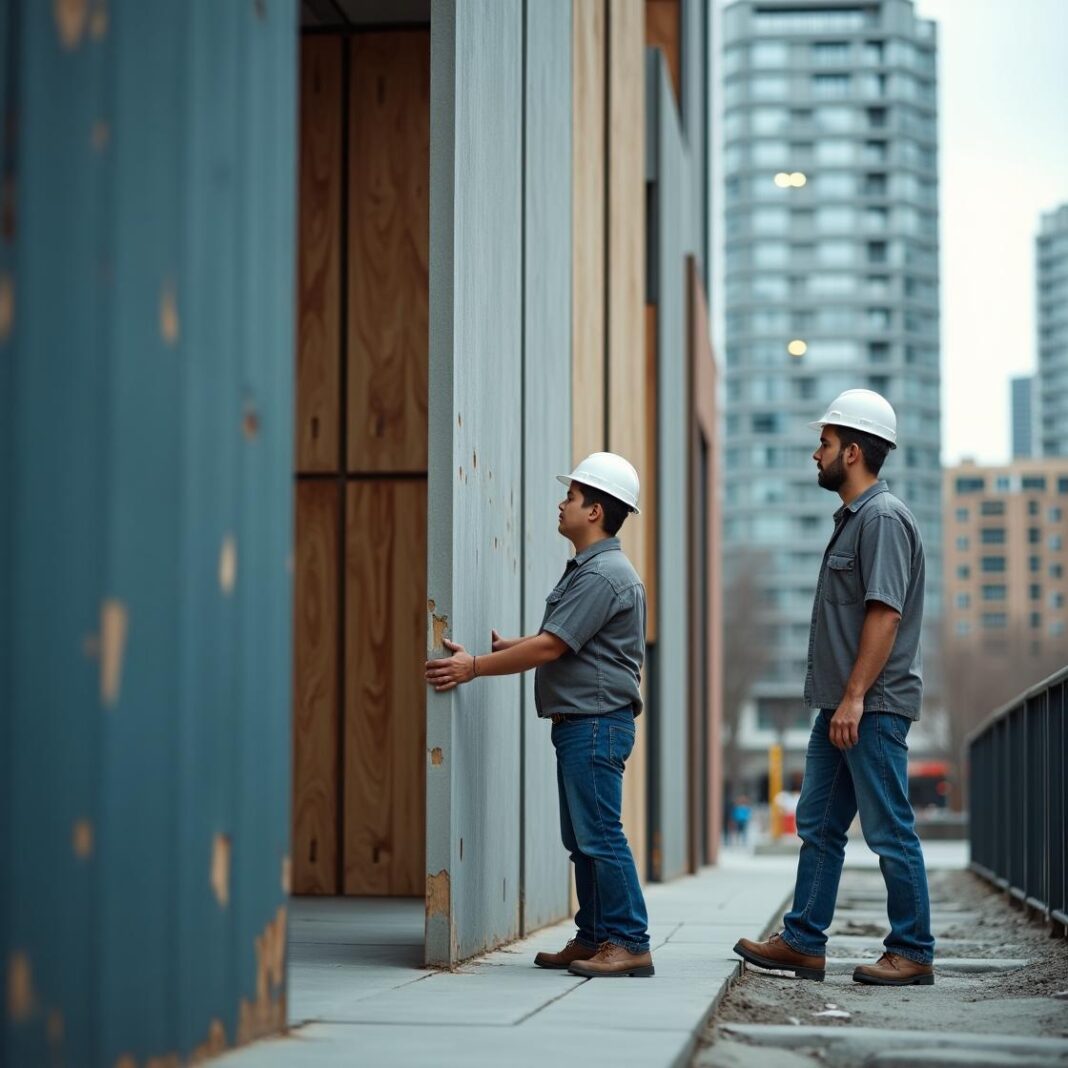

Structural panels are a foundational element in modern construction, offering the strength, stability, and support needed to ensure buildings stand the test of time. Their versatility and performance make them a critical component in both residential and commercial architecture.
The Role of Structural Panels in Building Frameworks
Structural panels serve as the backbone of a building’s framework. By integrating load-bearing capabilities directly into the panel design, they eliminate the need for redundant framing systems. This enhances structural integrity while optimizing the overall design and layout. From floor systems to wall assemblies and roofing structures, these panels deliver reliable performance across all applications.
In 2024, the global structural panel market was valued at approximately $12.3 billion, with projections indicating growth to $18.4 billion by 2033, reflecting a compound annual growth rate (CAGR) of 5.5% Redbuilt.
Materials Matter: Innovation and Quality in Panel Construction
Additionally, materials like concrete, steel, wood, bricks, cement, sand, gravel, glass, insulation, drywall, tiles, asphalt, lumber, rebar, gypsum, mortar, stone, aluminum, copper, pipes, beams, nails, screws, plaster, and roofing are integral to the composition of various structural panels, each contributing unique properties to meet specific construction requirements.
Efficiency and Speed of Installation
Modern construction projects require solutions that are not only durable but also time-efficient. Structural panels excel in streamlined installation processes, reducing labor hours and minimizing on-site errors. Their modular nature allows for quicker assembly compared to traditional framing methods, accelerating project timelines without sacrificing quality.
A study by RSMeans indicates that using structural insulated panels (SIPs) can reduce framing labor needs by up to 55% compared to conventional stick-building methods.
Thermal Insulation and Environmental Protection
Beyond structural performance, these panels contribute to a building’s insulation and environmental resistance. Some panel systems incorporate built-in insulation, helping to improve energy efficiency and reduce heating and cooling costs. Additionally, structural panels offer protection against moisture intrusion, air leakage, and pest infiltration, ensuring a safer indoor environment.
The global structural insulation panels market was valued at USD 593.1 million in 2024 and is projected to witness more than 6.5% CAGR between 2025 and 2034, driven by the increasing government initiatives for sustainable construction.
Sustainability and Environmental Responsibility
Sustainable construction practices prioritize materials that minimize environmental impact. Structural panels often use renewable resources and low-waste manufacturing processes, supporting green building certifications such as LEED. Their durability also reduces the need for frequent repairs or replacements, contributing to a more sustainable building lifecycle. For a closer look at this, see Role of Pre-Fabricated Wall Panels in Sustainable Development.
In North America, structural insulated panels (SIPs) accounted for over 39.7% of the market share in 2024, reflecting a growing emphasis on sustainable building practices.
Design Flexibility and Architectural Versatility
Architects and designers value the design flexibility structural panels offer. Available in various sizes, thicknesses, and configurations, they adapt easily to a wide range of architectural styles and functional requirements. Whether for single-family homes or multi-story commercial buildings, panels integrate seamlessly into diverse design visions.
The use of materials such as aluminum, copper, and glass in panel construction further enhances aesthetic appeal and functionality, allowing for innovative architectural expressions.
Enhanced Safety and Fire Resistance
Structural panels can also play a role in improving fire resistance and overall safety. Certain panel compositions include fire-retardant treatments or are manufactured to meet strict fire safety codes. This adds an additional layer of protection for building occupants and helps meet regulatory requirements in safety-sensitive applications.
For example, engineered timber panels like cross-laminated timber (CLT) have been shown to have fire resistance properties due to their charring behavior, which protects the structural core.
Cost-Effective Construction Solutions
Incorporating structural panels into a construction project often leads to cost savings. Their dual role as structural and insulating components reduces the need for multiple materials and layers, simplifying procurement and logistics. When combined with reduced labor costs and faster build times, these panels offer a highly cost-effective construction strategy.
The total life-cycle cost of a SIP-constructed building can be lower than that of a conventional framed one, by as much as 40%.
Reliable Engineering and Structural Reinforcement
Structural panels are engineered for predictability, allowing engineers to design with confidence. Their reinforcement capabilities enhance overall building rigidity and reduce movement-related wear over time. These properties are particularly valuable in seismic zones or areas prone to high wind loads, where building codes demand heightened structural performance.
Materials like rebar, beams, and steel are often integrated within structural panels to provide additional reinforcement, ensuring compliance with stringent building standards.
Performance Testing and Quality Assurance
To ensure reliability, structural panels undergo rigorous testing for load-bearing capacity, moisture resistance, insulation value, and fire performance. Manufacturers adhere to industry standards and quality assurance protocols to deliver panels that consistently perform to specification.
Applications Across the Building Industry
Structural panels are utilized across multiple segments of the construction industry. In residential construction, they streamline framing for walls, roofs, and floors. In commercial projects, they support large-span applications while maintaining structural consistency. Their use in modular and prefabricated construction is also expanding due to their adaptability and precision.
The U.S. structural insulated panels market was valued at USD 162.1 million in 2024 and is estimated to grow at a CAGR of over 7.1% through 2034, reflecting their increasing adoption in various building sectors.
Future Outlook: Innovation Driving Structural Panel Design
As construction demands evolve, so too does the innovation behind structural panels. Advances in materials science, sustainability practices, and digital design integration are shaping the next generation of panel systems. Builders can now select panels tailored for high-performance applications, such as hurricane zones or net-zero energy buildings.
Structural panels are indispensable to durable, cost-effective, and sustainable construction. Their contribution spans from structural reinforcement and design flexibility to thermal efficiency and long-term reliability. As innovation continues to drive improvements in materials and manufacturing, structural panels will remain at the forefront of modern building practices.
Read more about our Real estate category.