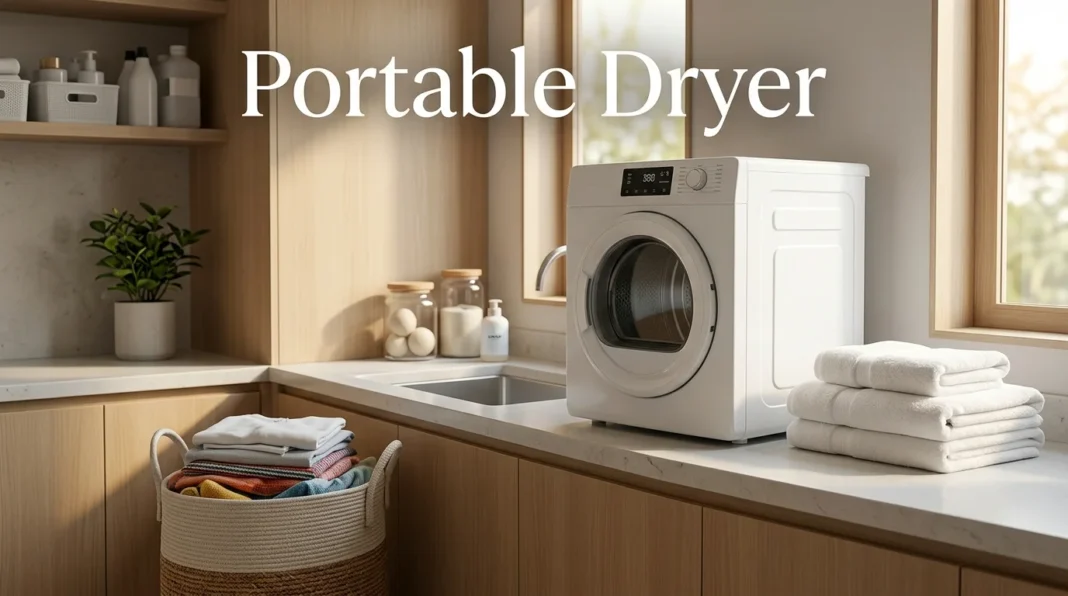

A portable dryer can solve a real laundry problem when space, hookups, or building rules limit full-size equipment. The right choice depends on venting, power, capacity, and your normal load size. For U.S. shoppers, those checks matter more than brand names or flashy cycle lists.
A compact drying appliance works best when its installation matches your home. Check the moisture path first, then voltage, load capacity, clearances, and lint access. Many small U.S. models use 120V power, but some still require outdoor exhaust. “Portable” does not automatically mean “ventless.”
Quick Facts for U.S. Buyers
| Question | Practical answer |
|---|---|
| Best fit | Apartments, studios, dorms, RVs, tiny homes, and secondary laundry areas |
| Common power | Many compact electric models use 120V, but model requirements vary |
| Main types | Vented tumble, true ventless, heated wardrobe, and spin-only units |
| Biggest buying mistake | Assuming every small unit can run without outdoor exhaust |
| Capacity reality | Small drums suit modest loads and usually struggle with bulky bedding |
| Safety priority | Follow the manual, clean lint areas, and keep exhaust paths clear |
A small machine can fit where a standard appliance cannot, but installation still shapes the purchase. Current U.S. listings include 1.5-cubic-foot units and models around 3.5 cubic feet. Larger capacity usually means more weight, more floor space, and less frequent load splitting.
Portable Dryer Types Compared
| Type | Best for | Main advantage | Main drawback | Typical current U.S. price pattern |
|---|---|---|---|---|
| Compact vented tumbler | Renters with an approved exhaust route | Familiar tumble drying | Needs compliant venting | Often about $170 to $475 |
| True ventless compact unit | Homes without an exterior vent | No outdoor exhaust duct | Higher cost or more service needs | Often about $300 and up |
| Heated wardrobe unit | Light garments and occasional use | Folds or stores easily | Slower, less uniform results | Often under $100 |
| Spin-only unit | Reducing water before rack drying | Fast water extraction | Does not fully dry clothing | Often around $150 to $200 |
Prices change often, so treat those ranges as a September 2026 market snapshot. Retail listings vary widely by size, features, and construction. Compare the final delivered price, warranty, and return terms before ordering.
Compact Vented Tumble Models
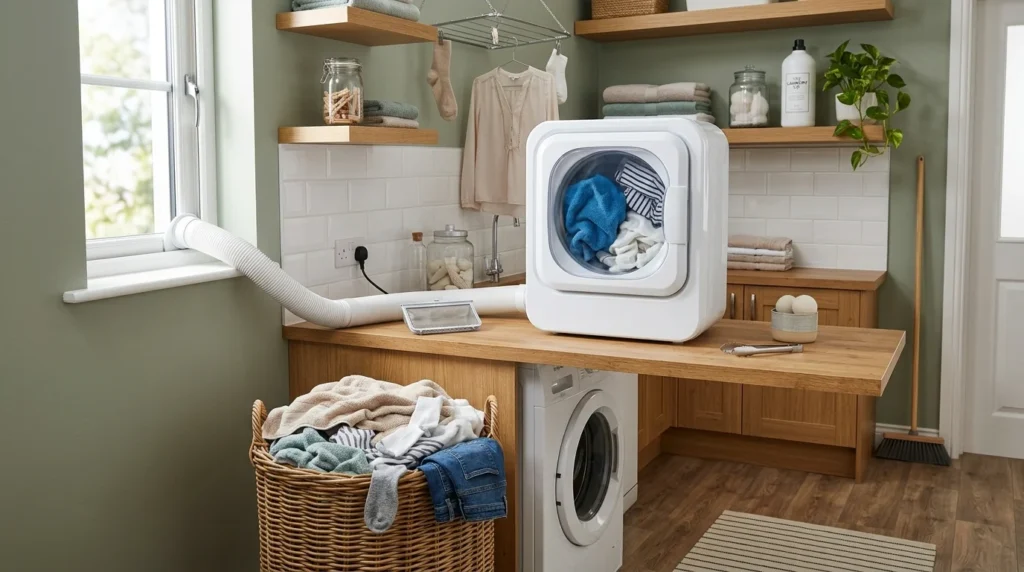
This type looks most like a traditional machine, but the cabinet and drum are smaller. Many U.S. examples use 120V power and a standard three-prong plug. Several still require a four-inch exhaust duct routed outdoors.
Pros include familiar controls, tumbling action, and useful sensor modes on some models. Cons include exhaust planning, smaller loads, and longer cycles than many full-size 240V machines. This category makes sense only when the vent route is permitted and practical.
True Ventless Models
A true ventless machine handles moisture without sending warm, damp air through an exterior duct. Heat-pump systems use a closed loop and collect or drain condensed water. Condenser designs also manage moisture internally, but details vary by model.
The main benefit is placement flexibility where outdoor venting is unavailable. The trade-offs can include higher purchase prices, condensate handling, and different cycle behavior. Always read the current manual before assuming a listing solves every installation problem.
Heated Wardrobe and Folding Units
These products hang garments inside a fabric enclosure while warm air circulates around them. They work well for shirts, underwear, socks, or other light items. Foldable frames also store more easily than a metal drum appliance.
Their low cost makes them attractive for occasional use or temporary storage. They usually offer less tumbling and less even drying than drum-based machines. Treat them as light-duty tools rather than direct replacements for standard laundry equipment.
Spin-Only Units
A spin unit uses centrifugal force to remove water from wet clothing. It can shorten rack-drying time after washing. It does not heat clothing or finish laundry like a tumble appliance.
This option works well when exhaust is impossible and air drying is acceptable. It also suits RVs, small homes, and backup laundry setups. Buyers should understand the endpoint before comparing it with heated machines.
7 Checks Before You Buy
- Confirm the moisture path. Determine whether the exact model vents outdoors, condenses water, drains water, or only spins moisture out.
- Check the electrical requirement. Verify voltage, amperage, plug type, and any dedicated-circuit instructions in the manual.
- Measure the full operating space. Include the door swing, exhaust hose, filter access, controls, and room for loading clothes.
- Match capacity to your washer. A tiny drum can turn one wash load into several drying cycles.
- Read the lease or building rules. Renters may face restrictions on venting, wall mounting, window kits, or appliance use.
- Compare lint access and maintenance. Easy filter cleaning matters when the machine runs several times each week.
- Check bulky-item limits. Comforters, thick blankets, and heavy towels can overwhelm compact equipment.
Capacity deserves special attention because drum space affects airflow. ENERGY STAR advises leaving enough room for clothing to tumble freely. Overloading increases drying time and can reduce efficiency.
AHomeGuru’s laundry room planning guide can help you measure doors, hookups, service access, and nearby work surfaces. Those same checks matter in a closet, bathroom corner, or multipurpose utility area. Plan the full operating footprint, not just the cabinet dimensions.
How Much Capacity Do You Need?
A single person with light weekly laundry can often manage with a small drum. A couple may prefer a larger compact unit to reduce split loads. Families with towels, jeans, and bedding may find a small appliance frustrating as the primary solution.
Current BLACK+DECKER listings show why capacity changes the experience. A 1.5-cubic-foot model lists a 5.5-pound clothing capacity, while a 3.5-cubic-foot model lists 13.2 pounds. Both examples use 120V power, yet both require outdoor exhaust.
Think about your washer before choosing the next machine. A strong final spin can remove more water before heat is needed. That can shorten the work left for the drying stage.
Venting Comes Before Convenience
The word “portable” describes size or mobility, not the moisture system. Some compact electric machines still push humid air through an exhaust connector. Sending that air into the room can create heat and moisture problems.
A true ventless appliance follows a different moisture path. ENERGY STAR explains that heat-pump models condense moisture instead of exhausting humid air outdoors. The collected water must still drain or be emptied from a tank.
For renters, building approval matters as much as the product manual. Don’t improvise an indoor exhaust route just because a unit fits near a window. Choose equipment whose required setup works with your lease and available space.
Safety and Maintenance Matter
Lint control is a routine safety task, not an optional cleaning chore. The U.S. Consumer Product Safety Commission warns that lint can block airflow and contribute to excess heat. It recommends cleaning the lint screen and periodically cleaning vents and exhaust ducts.
ENERGY STAR also recommends cleaning the lint filter after each load. Better airflow can improve efficiency while reducing avoidable heat buildup. Follow the manufacturer’s instructions for cleaning internal filters and exhaust parts.
Placement matters because service points need to stay reachable. AHomeGuru’s water-leak prevention guide also identifies laundry areas as places that deserve routine inspection. Keep plugs, hoses, vents, valves, and nearby surfaces visible enough for regular checks.
What Should You Expect to Pay?
Small drum models usually cost more than foldable heated enclosures but less than many full-size machines. Current U.S. retailer listings show compact tumble options from roughly $170 to $400. Larger specialty models can cost much more.
A foldable heated enclosure can cost under $100, while a countertop ventless product can run near $400. Prices can shift with sales, shipping, and seller changes. Compare model documentation before treating a low price as a complete installation solution.
Buying the wrong type can cost more than spending extra on a compatible one. An unusable vented machine creates return costs, storage problems, and frustration. Start with your home’s constraints, then compare features within the right category.
Which Type Makes the Most Sense?
For most U.S. renters with an approved outdoor exhaust route, a compact vented tumbler offers the simplest familiar setup. It combines real heated tumbling with common 120V options. Choose capacity based on your washer load and available floor space. Elsewhere on the site: Washer and Dryer Bundles Under $500.
If outdoor exhaust is impossible, look for a true ventless model with documented moisture handling. A heated wardrobe is better for occasional light loads and tighter budgets. A spin unit works when rack drying is acceptable after water extraction.
The best purchase is the machine your home can support safely every week. AHomeGuru’s garage organization guide offers useful ideas for vertical storage and clear work zones. Similar planning can keep a small laundry corner usable without blocking access.
FAQs
Does a portable dryer need a vent?
Some do, and some do not. Vented tumble models need the exhaust arrangement stated in their manuals. True ventless designs manage moisture through condensation, drainage, or a water tank.
Can I use a compact drying machine in an apartment?
Often yes, but the lease and building rules still apply. Check power, venting, mounting, drainage, and window restrictions before buying. A standard outlet does not cancel other installation requirements.
How long does a small electric unit take to dry clothes?
Drying time varies with power, load size, fabric weight, moisture level, and airflow. Some 120V compact models offer timers up to about 200 minutes. Sensor modes may stop sooner when clothing reaches the target dryness.
Are small laundry machines worth it?
They can be worthwhile for one person, a couple, or a home with limited laundry space. The value drops when every wash load requires several drying cycles. Large households should compare time, capacity, and utility use against shared or full-size options.
What features matter most?
Start with the moisture system, electrical requirements, capacity, and physical dimensions. Then compare sensor drying, lint access, cycle choices, noise, and mounting options. Warranty support and replacement filters also matter for long-term ownership.
Make Your Final Choice
Measure the space, confirm the moisture route, and check the exact electrical requirements before comparing colors or cycle names. Then choose a capacity that fits your real weekly laundry volume. This order prevents most compatibility mistakes.
Keep the manual and maintenance schedule with your laundry supplies after setup. Clean filters on schedule and inspect exhaust parts when the model uses them. A well-matched machine should reduce laundry friction without creating new space or safety problems.